
Reflections on David Letterman’s Interview Style and Cultural Shifts
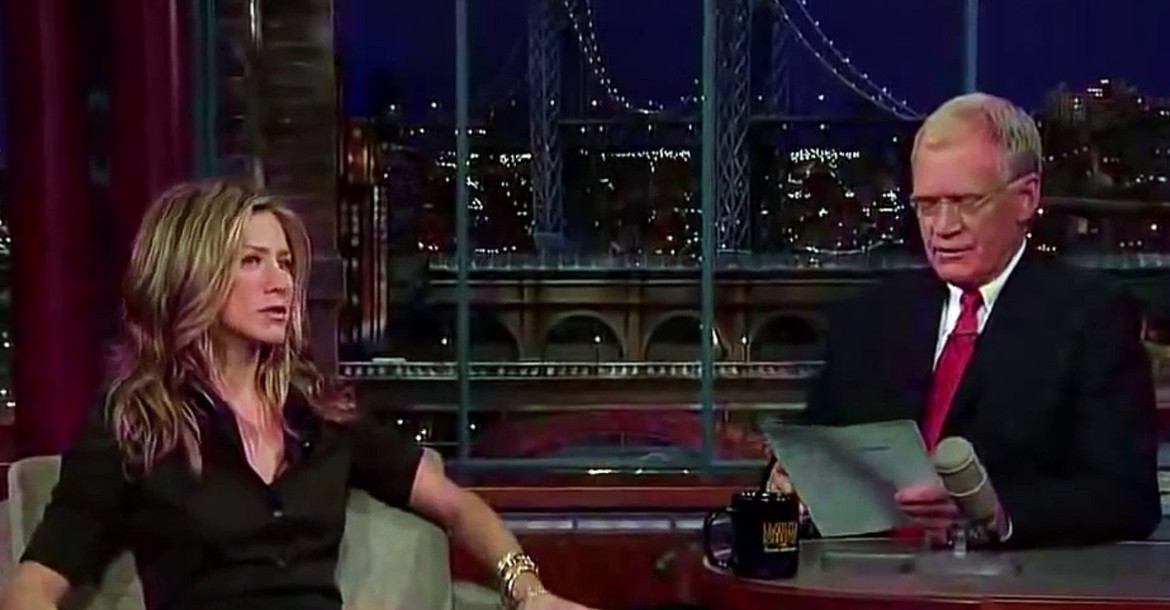
David Letterman, a legendary figure in late-night television, has long been celebrated for his quick wit and engaging interview style. His unique blend of humor and candidness has made him a staple in American pop culture since the 1980s. However, as societal values evolve, some of his past interactions, particularly with female guests, have come under scrutiny. One particularly notable example is his 2006 interview with actress Jennifer Aniston, who appeared on The Late Show to promote her film The Break-Up. Instead of concentrating on the film’s themes and messages, Letterman diverted the conversation toward Aniston’s appearance, fixating on her legs in a manner that many today would deem uncomfortable and inappropriate.
During this interview, Letterman made several remarks about Aniston’s legs, stating that she could only wear her outfit due to her “lovely, well-shaped, muscular, lengthy legs.” Aniston’s reaction was telling; although she maintained a polite smile, her visible discomfort was hard to miss. This moment illustrates a broader pattern where female celebrities are often objectified in public forums. As Letterman continued to obsess over her appearance, he stated, “I can’t get over your legs,” further emphasizing his fixation during a segment that had the potential to explore Aniston’s professional endeavors rather than her physical attributes. Such behavior raises critical questions about the boundaries of professional interviews and the expectations placed on women in the industry.
As the conversation continued, Letterman shifted the focus to Aniston’s rumored relationship with her co-star Vince Vaughn. He even went so far as to ask if it was Vaughn’s idea for her to appear nude in the film. Aniston, ever the professional, attempted to redirect the dialogue back to the movie itself, emphasizing the storyline and her character’s development. However, the awkwardness lingered, raising questions about the appropriateness of Letterman’s approach. This incident exemplifies a significant change in societal expectations regarding the treatment of women in media settings and highlights the evolving standards of what is deemed acceptable behavior. How often do we see male actors being treated similarly, and why does this disparity persist?
This interview is not an isolated incident. Letterman has a history of interactions with Aniston that have sparked online debate and concern. In a 1998 appearance, he surprised her by playfully grabbing her hair—an incident that has resurfaced in clips circulating on social media. Viewers today often express shock and disbelief at how casually this type of behavior was normalized in the past. The juxtaposition of the audience’s reactions then and now underscores how much cultural contexts and norms have shifted over the years. The advent of social media has allowed audiences to engage in discussions about such moments, prompting a reevaluation of what was once considered harmless banter.
The reflections on Letterman’s past conduct provide an opportunity for deeper conversations about gender dynamics in entertainment. It’s essential to examine how societal norms influence the way women are treated in interviews and public life. As audiences grow increasingly aware of issues surrounding consent and respect, the tolerance for objectifying comments and invasive questions has diminished significantly. This cultural shift begs the question: how can television hosts adapt to these evolving standards while still maintaining engaging and entertaining conversations? The balance between humor and respect is delicate, but it is increasingly clear that the latter must prevail.
Ultimately, the evolution of public perception regarding the treatment of women in interviews reflects a broader societal trend toward greater respect and equality. This shift is not only relevant to late-night talk shows but also extends to various facets of media, including film, television, and journalism as a whole. For instance, the #MeToo movement has illuminated the pervasive issues of harassment and objectification in the entertainment industry, prompting a reassessment of traditional practices. As audiences become more attuned to the subtleties of language and behavior, the hope is that future generations of entertainers will foster environments that promote inclusivity and respect, rather than allowing outdated norms to persist. This endeavor requires ongoing dialogue and commitment from all stakeholders in media.
The legacy of figures like David Letterman is complex; while he undeniably contributed significantly to the world of television, his past interactions serve as important reminders of the critical need for continual growth and understanding in how we engage with one another. As we navigate this cultural landscape, it becomes imperative to hold figures in positions of power accountable for their words and actions. In doing so, we pave the way for a more equitable and respectful industry that honors the humanity of all individuals, regardless of gender. The evolution of interview styles, particularly in late-night television, will continue to be a reflection of our societal values, and it is crucial that we embrace this change.
















