
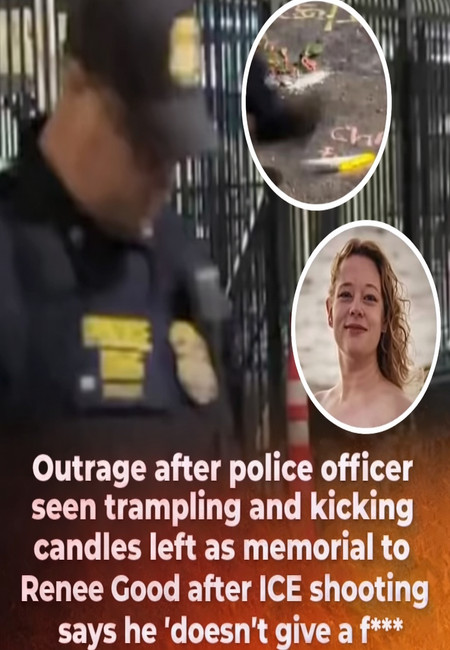
Controversial Actions of Homeland Security Officer at Memorial Site
A recent incident involving a Department of Homeland Security (DHS) officer has ignited a wave of outrage and condemnation from the public and various advocacy groups. This incident took place at a memorial dedicated to Renee Nicole Good, a Minneapolis mother who tragically lost her life during an encounter with an Immigration and Customs Enforcement (ICE) agent. The reactions have been swift and intense, highlighting the ongoing tensions surrounding law enforcement’s role in immigration matters. This example serves as a poignant reminder of the complex dynamics between immigration enforcement and the communities that feel their impact most acutely.
The uproar began when a video surfaced on social media platforms, including Bluesky and X, depicting the officer, identified by a “Police DHS” insignia, deliberately kicking over a candle that was part of the memorial to Renee Nicole Good. The significance of this act cannot be overstated; it not only disrespected the memory of a grieving family but also raised serious questions about the appropriateness of law enforcement interactions with communities already strained by immigration policies. The memorial was a place of solace for many, a sacred space where individuals came together to remember Renee and reflect on the broader issues of systemic injustice.
The Context of the Memorial
Renee Nicole Good, a mother of three, died during a confrontational situation involving ICE agents, an event that has left a profound impact on her family and the larger Minneapolis community. The circumstances surrounding her death were marked by heightened tensions and fear, particularly among immigrant populations who often feel targeted by law enforcement. Memorials such as the one for Renee have emerged as vital spaces for communities to grieve and remember those lost to violence or systemic injustices. In this context, the candle that was knocked over represented more than just a light; it symbolized hope, remembrance, and the unresolved grief of a family mourning the loss of a beloved member. This trivialization of a memorial underscores the delicate balance that exists between law enforcement and community relations, particularly for marginalized groups.Moreover, the incident speaks volumes about the relationship between law enforcement agencies and immigrant communities. Many residents feel that their safety is compromised due to aggressive policing tactics and the presence of ICE. The decision by the DHS officer to act in such a manner at the memorial not only disrespects the deceased but also exacerbates existing fears and frustrations within the community regarding law enforcement’s approach to immigration enforcement. The officer’s actions can be perceived as a manifestation of systemic indifference to the pain and suffering experienced by families like Renee’s, further alienating those who already feel marginalized.
Community Reaction and Outrage
The community’s response has been overwhelmingly critical of the officer’s actions. Social media platforms have become a battleground for outrage, with many users condemning the officer’s behavior as unprofessional and inconsiderate. Activists and community leaders have called for accountability, emphasizing the need for policies that foster respect and understanding between law enforcement and marginalized communities. The incident has sparked discussions around the necessary training that officers should receive to prevent such incidents from occurring in the future. Conversations are emerging about the importance of cultural sensitivity and the need for officers to understand the diverse communities they serve.Local activists have organized vigils and peaceful protests, drawing attention to the issues of police accountability and immigration reform. These gatherings serve to honor Renee Nicole Good and to advocate for a future where communities are not only safe but also treated with dignity and respect. The actions of the officer have galvanized many to demand changes in how law enforcement interacts with immigrant populations and to seek justice for those who have suffered due to systemic failings. The community’s unity in the face of such a disrespectful act reflects a collective determination to confront the injustices that continue to plague marginalized groups.
Implications for Policy and Law Enforcement
This incident serves as a stark reminder of the need for comprehensive reform within law enforcement agencies, especially concerning their roles in immigration enforcement. Advocates argue that law enforcement officers should receive training on cultural sensitivity, community engagement, and the impact of their actions on vulnerable populations. Such reforms could help rebuild trust between law enforcement and the communities they serve. For example, implementing community policing models could create avenues for officers to engage positively with residents rather than being seen primarily as enforcers of immigration laws.Furthermore, this event underscores a critical moment for policymakers to reevaluate the relationship between federal immigration enforcement and local law enforcement agencies. The blending of these roles can create a climate of fear among immigrant communities, where individuals may feel discouraged from reporting crimes or seeking help due to the potential involvement of ICE. Ensuring clear boundaries and fostering a community-oriented approach to policing is essential for promoting safety and justice for all residents. Legislative efforts are needed to separate local policing from federal immigration enforcement, thereby alleviating the fear that pervades immigrant neighborhoods.
Broader Impact on National Discourse
The repercussions of this incident extend beyond Minneapolis, contributing to the national conversation surrounding immigration policy and law enforcement practices. In recent years, the United States has grappled with intense debates over immigration reform, border security, and the treatment of immigrants. Incidents like these add fuel to the fire, prompting calls for a reassessment of the values and practices that guide immigration enforcement. The public outcry in response to the officer’s actions reflects a growing awareness and intolerance for disrespectful behavior toward marginalized groups.As communities across the nation continue to call for change, the actions of a single officer can serve as a catalyst for broader movements advocating for justice and dignity. The collective outrage sparked by the officer’s actions at the memorial for Renee Nicole Good highlights the urgent need for dialogue and reform in how law enforcement engages with all communities, particularly those impacted by immigration policies. The need for empathy and understanding in law enforcement is more pressing than ever, as communities seek to heal and rebuild trust.
















