
The Power of Perspective: A Meeting with a School Psychologist
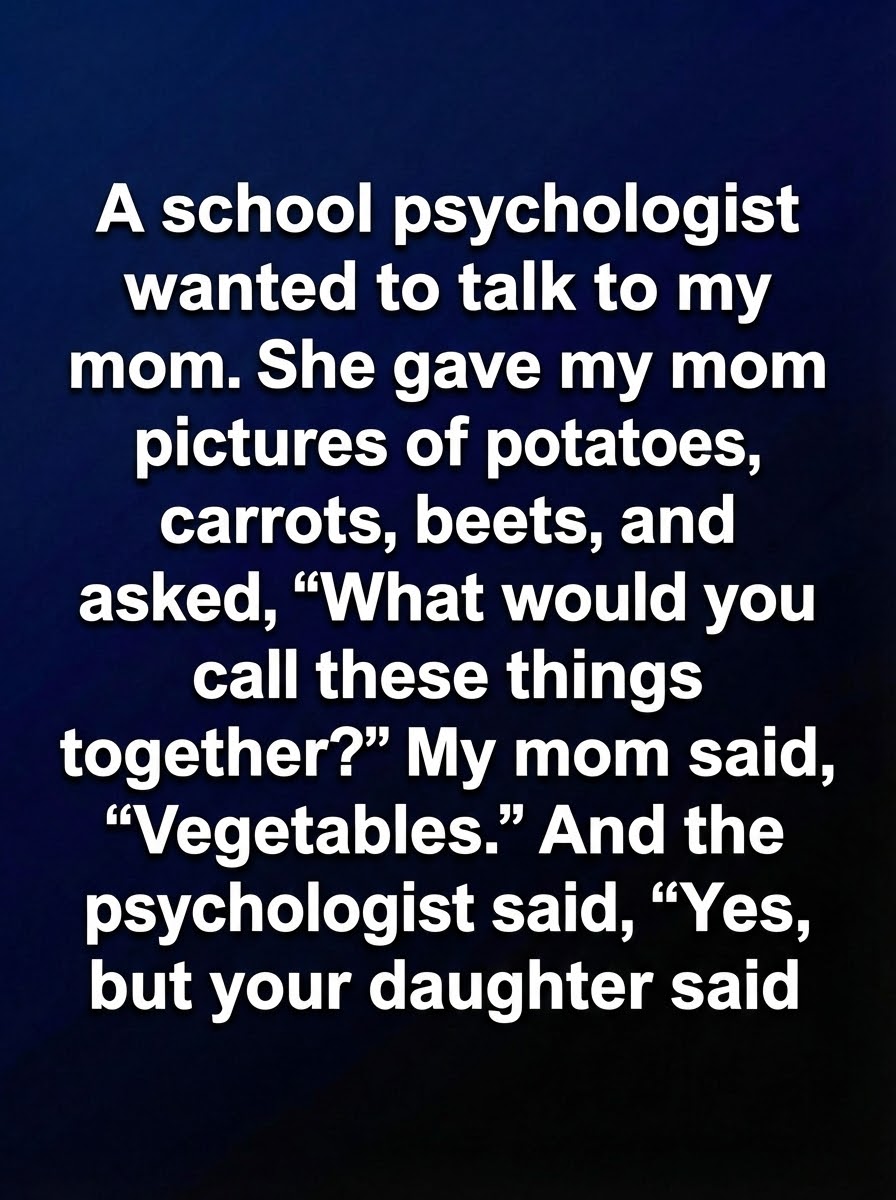
The encounter with the school psychologist unfolded in a calm and unhurried manner, setting an unexpectedly reflective tone for what was to follow. My mother found herself seated across a modest desk, where the psychologist had laid out several familiar images: potatoes, carrots, and beets. These were not just mere illustrations; they represented the simplicity of everyday life and the essence of nourishment. A seemingly straightforward question arose: “What would you call these things collectively?” My mother, without a moment’s pause, replied, “Vegetables.” This answer was logical, precise, and it appeared to wrap up the inquiry instantly. However, the psychologist’s reaction was one of gentle amusement as he clarified that the purpose of the exercise extended beyond merely testing knowledge.
Earlier that day, I had been presented with the same images and posed the identical question, yet my response diverged significantly from my mother’s. I did not categorize these items into neat definitions; instead, my thoughts drifted towards memories of family dinners, gardens brimming with produce, and the warmth of meals shared with loved ones. To me, these images transcended their physical form; they were vessels of cherished experiences and narratives that defined my understanding of food. The psychologist then engaged us in a conversation about the varied ways individuals process information, highlighting the fact that no single method is superior to another. His gentle demeanor and insightful observations nurtured an environment where our perceptions were not only acknowledged but also celebrated.
Diverse Thought Processes: The Key to Understanding
The psychologist explained that there are two primary ways in which people approach information: some minds categorize data through straightforward labeling, while others weave connections through emotions, imagery, and personal stories. This distinction between analytical and narrative thinking is not merely an academic observation; it shines a light on the richness of human cognition. In a world that often values conformity in thought and intelligence, this session served as a valuable reminder that diversity in thinking can foster creativity and innovation.
As the psychologist elaborated, he shared examples of how different professions might favor varying cognitive styles. For instance, scientists and mathematicians often thrive on logical reasoning and categorization, while writers and artists may rely more on emotional connections and storytelling. My mother listened intently, beginning to appreciate that intelligence is not a monolithic construct; rather, it comes in various forms. Some individuals excel in analytical reasoning, while others may demonstrate exceptional emotional intelligence, creativity, or intuition. Recognizing and valuing these unique cognitive styles can transform our understanding of what it means to be “smart.” As the conversation unfolded, the initially clinical atmosphere evolved into one of warmth and understanding, emphasizing the importance of recognizing and nurturing different kinds of intelligence.
Lessons in Empathy and Connection
By the conclusion of our meeting, what began as a simple inquiry about vegetables had morphed into a profound exploration of human thought processes. The atmosphere, once tinged with apprehension, now felt reassuring and open. The psychologist’s insights served as a gentle reminder that the value of understanding often far surpasses the need for correction. This enlightening experience not only reshaped my mother’s perceptions but also instilled in both of us an appreciation for the stories and experiences that shape our interactions with the world.
We walked away from that meeting with a renewed perspective on the complexity of human thought. The realization that answers need not conform to a singular mold in order to be deemed valuable resonated deeply. Sometimes, the most vital insights arise not from the act of naming things correctly but from embracing the myriad ways in which individuals perceive and interpret their surroundings. This understanding holds particular significance in educational and social settings, where fostering an inclusive environment can lead to more meaningful connections and richer experiences. It also emphasized the need for empathy in our everyday interactions, encouraging us to listen and appreciate diverse viewpoints.
Embracing Cognitive Diversity in Education
In the broader context of education, the lessons gleaned from that day underscore the importance of embracing cognitive diversity. Educational systems often tend to favor traditional forms of intelligence, placing undue emphasis on standardized testing and rigid curricula. However, by recognizing the myriad ways in which students learn and engage with material, educators can create more inclusive learning environments that cultivate creativity, critical thinking, and emotional intelligence. For instance, allowing students to choose projects that resonate with their personal interests can lead to deeper engagement and more meaningful learning experiences.
Incorporating diverse teaching methodologies—such as project-based learning, collaborative group work, and experiential learning—can help students from all backgrounds flourish. For example, a group of students might work together to develop a community garden, combining scientific principles with artistic design and personal stories of cultural significance. Such projects not only enhance knowledge retention but also foster collaboration and understanding among peers. Additionally, fostering open dialogues about different cognitive styles can empower students to recognize their unique strengths and appreciate the differences in their peers. Ultimately, education should not merely be about the transmission of knowledge but rather about nurturing the whole individual, equipping them with the tools to navigate a complex world.
In conclusion, the meeting with the school psychologist was far more than just an examination of cognitive processes; it was a celebration of the richness of human experience. By valuing diverse thought processes and encouraging open-mindedness, we can foster both personal growth and community understanding. So, the next time we encounter a simple question, let us remember that the answer may not lie solely in categorization but rather in the beautiful tapestry of stories, memories, and insights that define our unique perspectives on life. Through this lens, we can approach our relationships and our educational systems with renewed vigor and compassion, ensuring that every voice is heard and valued.
















