
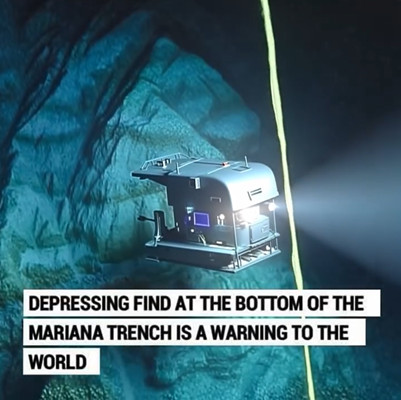
The Mariana Trench: A Harrowing Reflection of Human Impact
For centuries, the Mariana Trench has captivated scientists and adventurers alike as the **deepest part of the Earth’s oceans**. Nestled in the western Pacific Ocean, this trench descends to staggering depths of nearly 36,000 feet (about 11,000 meters), surpassing even the height of Mount Everest. Traditionally perceived as a remote and untouched wilderness, it was once thought to be safe from the effects of human activity due to its extreme conditions of darkness, immense pressure, and cold temperatures. However, the discovery of a simple plastic bag resting on its seafloor shattered this illusion, revealing a troubling truth: human influence extends far beyond our immediate surroundings.
Scientists had long regarded the trench as an isolated ecosystem, where life existed in its own fragile equilibrium. Yet, the shocking presence of a plastic artifact highlighted that **no place on Earth is truly immune** to the consequences of human actions. This significant find prompted an urgent reevaluation of our interconnectedness with the planet and underscored the reality that our choices, even those made thousands of miles away, can resonate through natural systems. The implications of this discovery are profound, suggesting that the degradation of environments takes on new dimensions when we consider the effects on the most remote ecosystems.
Life in Extreme Conditions
Despite the harsh conditions found in the Mariana Trench, including near-freezing temperatures and crushing water pressure that exceeds 1,000 times that at sea level, **life not only exists but flourishes**. Remarkably diverse species have adapted to these extreme environments over millions of years, showcasing an incredible variety of life forms. From translucent jellyfish that drift gracefully in the dark to gelatinous snailfish, giant amphipods, and microbial communities thriving without sunlight, these organisms exhibit unique adaptations that enable survival in a realm where most life would perish. The stunning biodiversity present in this trench has evolved in relative isolation, leading to delicate ecological balances that can be easily disrupted.
The Alarming Reality of Plastic Pollution
The plastic bag discovered within the Mariana Trench was not an isolated case; extensive research has shown that **plastic pollution permeates even the most remote ocean depths**. Studies indicate that approximately one in five plastic items retrieved from the trench exhibits signs of interaction with marine life. This alarming statistic reveals that deep-sea organisms are encountering plastic waste, impacting their health and survival. For instance, some species mistake plastic fragments for food and ingest them, while others can become entangled in debris, leading to injuries that can affect their mobility and reproduction. The slow growth rates and long lifespans of many deep-sea species compound the problem, as any damage inflicted may take decades or centuries to recover.
How Plastic Travels to Remote Depths
Understanding the journey of plastic from land to the Mariana Trench involves recognizing the **interconnected nature of our planet’s ecosystems**. Waste disposed of on land can easily be swept into rivers and streams during rainfall, ultimately making its way to the oceans. Ocean currents then carry this debris across vast distances, often leading it to settle in deep-sea trenches after being weighed down by microorganisms that adhere to its surface, a process known as biofouling. Research has revealed that roughly 89% of the plastic found in the Mariana Trench consists of single-use items, such as wrappers and bags, produced from common human activities. This alarming reality emphasizes how individual choices and behaviors contribute to a global issue that knows no geographical boundaries.
Long-Term Implications of Plastic in Marine Ecosystems
One of the most concerning characteristics of plastic is its **extraordinary durability**. Most plastics do not naturally biodegrade; instead, they break down into microplastics, tiny particles that can persist in the ocean for centuries. These microplastics can easily be consumed by marine organisms, from microscopic plankton to larger fish and mammals, posing severe health risks. In deep-sea environments where natural processes slow significantly, plastic can remain indefinitely, creating a persistent presence of artificial materials in ecosystems that evolved without them. The potential for chemical pollutants to leach from plastics into surrounding waters or accumulate in the tissues of marine life raises serious concerns about the long-term health of these poorly understood ecosystems.
A Call for Collective Responsibility
The discovery of plastic in the Mariana Trench serves as a **stark reminder** of our shared responsibility in addressing pollution. Oceans do not recognize human-made borders; thus, pollution introduced in one area can affect far-reaching ecosystems. Communities, industries, and governments must understand that their actions have implications that extend well beyond their immediate vicinity. This realization calls for a collective commitment to tackling the issue of plastic waste. Efforts to reduce plastic pollution have gained momentum, with many regions implementing bans on single-use plastics and promoting improved waste management practices. However, policy changes alone are not enough; they must be accompanied by public participation and a shift in consumer behavior.
The Role of Individual Choices and Education
While the scale of plastic pollution can feel overwhelming, individual choices can significantly impact the environment. The majority of plastic found in the Mariana Trench originates from everyday consumer products, emphasizing that our daily decisions shape the future of our oceans. By opting for reusable bags, containers, and bottles, consumers can actively reduce demand for single-use plastics. Additionally, proper waste disposal and recycling practices play a vital role in preventing waste from entering waterways. **Education** is equally important. By raising awareness about the interconnectedness of our actions and their effects on distant ecosystems, individuals are empowered to make informed choices that support sustainability.
Protecting the Future of Our Oceans
Safeguarding the oceans and their ecosystems requires **dedicated collaboration** across various sectors. Continuous research is essential to fully comprehend the impacts of pollution and to inform effective policy decisions. Education empowers communities to adopt sustainable practices, while innovative solutions, such as biodegradable materials and improved packaging designs, pave the way for a cleaner future. Ultimately, the health of our oceans is intertwined with human well-being; clean oceans contribute to global climate regulation, food security, and biodiversity. The Mariana Trench carries a vital message for humanity: the decisions made today will determine the fate of life on Earth, both seen and unseen.
In conclusion, the plastic bag discovered at the bottom of the Mariana Trench serves as a powerful symbol of our interconnectedness and shared responsibility for environmental stewardship. Protecting these hidden realms is not merely an abstract ideal—it is a vital necessity for the future of our planet. By committing to reducing waste, supporting sustainable practices, and acting with awareness, we can work towards ensuring that our oceans remain resilient for generations to come. Our actions matter, echoing through the depths of the sea to the farthest reaches of the Earth. The Mariana Trench stands as a poignant reminder that caring for our planet is a collective responsibility we can no longer afford to ignore.
















