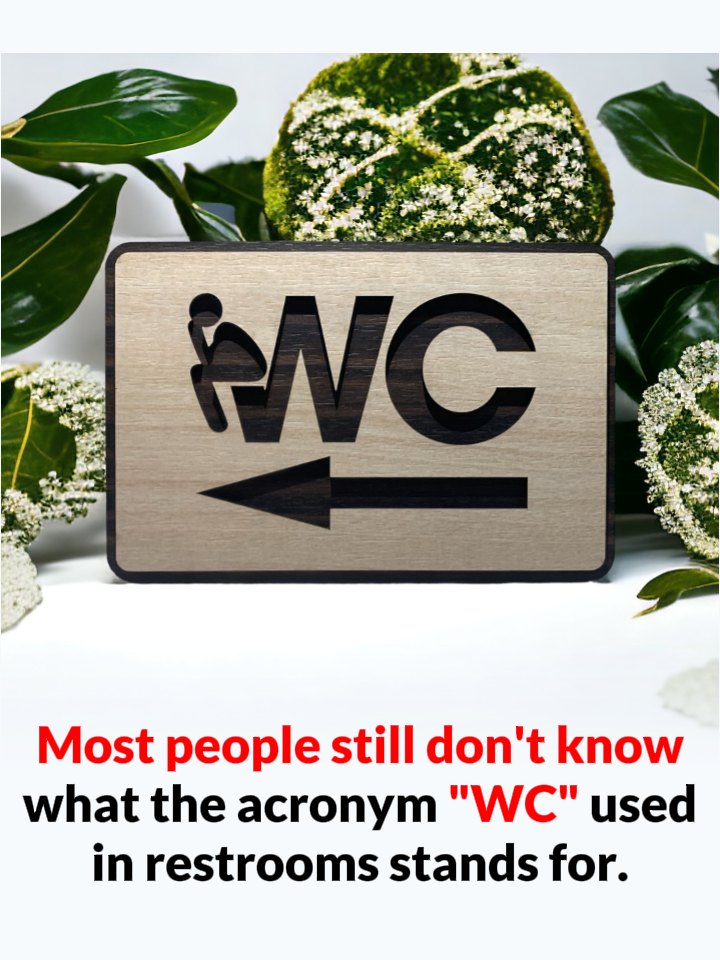
The Global Language of Restroom Signs: Understanding “WC” and Beyond
Have you ever found yourself in a foreign airport or restaurant, spotting the letters WC and wondering what they mean? While most people recognize it as a bathroom sign, the historical context behind this abbreviation is less commonly known. WC stands for Water Closet, a term that hails from 19th-century England, where it described a small room equipped with a flushing toilet. This term not only reflects technological advancements of that era but also the changing societal attitudes towards sanitation and privacy. The Water Closet was a significant step away from the less private methods of waste disposal that had been prevalent before, such as communal latrines. Despite the evolution of language and sanitation practices, this abbreviation has endured, continuing to be used globally, particularly in regions like Europe and Asia, where it is a staple in public signage.
The Varied Vocabulary for “Bathroom” Around the World
Interestingly, the term for “bathroom” can differ dramatically depending on the geographical location and cultural context. In the United States, the terms Restroom or Bathroom are commonly used, often reflecting a cultural preference for politeness and decorum. The choice of words is significant, as they convey not only function but also an attempt to maintain a sense of dignity regarding bodily functions. In Canada, you may hear Washroom, which conveys a similar but distinct meaning, often associated with cleanliness and hygiene. Over in the United Kingdom, straightforward terms like Toilet or Loo are standard, with the latter being a more casual, colloquial term that carries its own cultural weight. In contrast, in places like the Philippines, the abbreviation CR, which stands for Comfort Room, highlights a different aspect of the restroom experience, focusing on comfort rather than mere functionality. These lexical discrepancies can lead to confusion for international travelers, underscoring the necessity for universally recognizable restroom signs.
Sadržaj se nastavlja nakon oglasa
The Role of Universal Icons in Navigating Facilities
Beyond mere words, the majority of public bathrooms are marked with universal stick-figure icons: a figure in pants typically represents males, while a figure in a skirt signifies females. These simplistic images are deliberately designed to be instantly understandable, transcending language barriers.
The minimalist approach ensures that travelers can easily locate restrooms without the need for extensive language skills. This visual language is a testament to the need for accessibility in public spaces, contributing to a seamless experience for people from diverse linguistic backgrounds.
In addition to these standard icons, some places have begun to incorporate more inclusive designs that represent non-binary individuals, highlighting the growing recognition of gender diversity worldwide.
The Potential for Confusion: Creative Bathroom Signs
However, not all restroom signs are as straightforward as they seem. Some establishments opt for whimsical or artistic representations instead of traditional icons, using creative elements such as hats, mustaches, or flowers.
While these artistic variations can add charm and character to a venue, they often lead to confusion for visitors trying to interpret these imaginative depictions. For instance, a sign featuring a cat with a bow tie might indicate the men’s room, while a flower pot could signify the women’s room.
This highlights why international locations, such as airports, generally stick with the universally recognized WC and standard gender icons to ensure clarity and prevent hesitation. In the digital age, where social media can amplify misunderstandings, the need for clear communication in public facilities has never been more critical.
The Language of Restroom Signs: Politeness vs. Directness
The language used adjacent to restroom icons also varies significantly across cultures. In many European and Asian countries, WC remains a popular choice, symbolizing both tradition and practicality.
In contrast, in the U.S., the term Restroom is favored as it sounds more polite and formal, emphasizing the importance of social etiquette in public spaces.
Conversely, in the UK, the term Toilet is completely normal for everyday use, whereas in the United States, it may come across as overly blunt or even crass in certain contexts.
This linguistic diversity underscores how language and cultural norms influence even the most basic facilities that cater to human needs. Notably, some cultures may even utilize euphemisms or indirect language to discuss such topics, reflecting deeper societal values surrounding privacy and modesty.
The Rise of Gender-Neutral Restrooms: A Step Towards Inclusivity
In recent years, a notable shift has occurred with the introduction of gender-neutral bathrooms in various public spaces. These restrooms often feature signs that either avoid specifying gender entirely or utilize combined figures to represent all individuals, thereby acknowledging the existence of non-binary and gender-fluid people.
This trend reflects a growing movement toward inclusivity and social justice, ensuring that people of all genders feel welcome and safe when using these facilities. Prominent examples can be seen in universities, corporate offices, and progressive cities where creating a welcoming environment is prioritized.
By promoting gender-neutral options, society acknowledges the diverse identities of its members and moves toward a more accommodating environment that respects everyone’s dignity and needs.
A Universal Language: Recognizing Shared Human Needs
The next time you encounter WC in an airport or a public place, you can appreciate that this abbreviation has roots tracing back to Victorian England.
Additionally, when observing the male and female icons, you will recognize them as part of a carefully crafted global language designed to facilitate understanding across cultures.
Regardless of whether you refer to it as a restroom, toilet, bathroom, or washroom, one fact remains indisputable: these signs exist because some human needs are universal.
In a world rich with linguistic and cultural diversity, restroom signs serve as a reminder of our shared experiences and the importance of accessibility in public life.
The evolution of restroom signage is not just about practicality; it represents broader social changes and the ongoing dialogue around inclusivity, identity, and cultural sensitivity. Ultimately, the language of restroom signs reflects our collective commitment to creating spaces that are welcoming for everyone.