
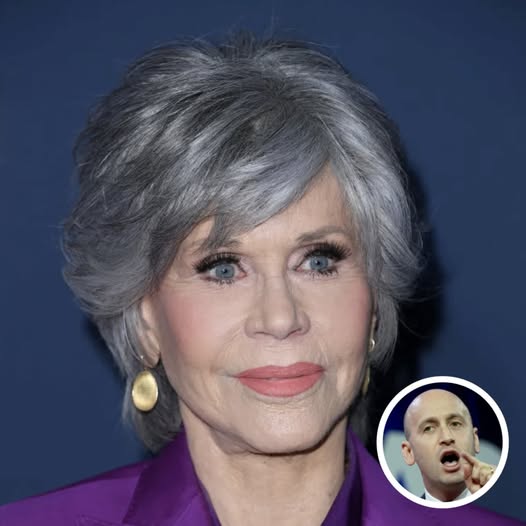
The Enduring Legacy of Jane Fonda: Activism and Public Perception
Jane Fonda, an iconic figure in Hollywood, has long been at the center of turbulent discussions regarding her legacy as an activist. The reverberations of her actions during the Vietnam War, particularly her controversial visit to North Vietnam in 1972, continue to elicit both admiration and condemnation. Recent comments by public figures, such as Stephen Miller, have reignited debates over her activism and its implications on how she is perceived today. This ongoing discourse brings to light essential questions about the role of celebrity activism, patriotism, and the historical context of political engagement.
The Historical Context of Fonda’s Activism
During the Vietnam War, a conflict that sharply divided American public opinion, Jane Fonda emerged as a vocal opponent of U.S. military involvement. The early 1970s were characterized by intense protests and societal upheaval, with millions of Americans advocating for an end to the war. Fonda, already a prominent actress known for her roles in films such as Klute and Coming Home, utilized her fame and platform to champion the anti-war movement. Her activism included public speeches, media interviews, and participation in large-scale demonstrations aimed at mobilizing sentiment against the war.
The Long Shadow of Controversy
For decades, the nickname “Hanoi Jane” has colored the public’s perception of Fonda, often overshadowing her contributions to film and society. The image of her during the Vietnam War remains a polarizing symbol; for some, it represents a stark reminder of the divisions of that era, while for others, it is merely a single moment in her extensive career. This complex legacy is further complicated by the fact that Fonda has publicly acknowledged the ramifications of her actions. She has expressed regret for how her trip was perceived, stating that she had not fully grasped the implications at the time. Her reflections on the photograph and its impact reveal a nuanced interplay between celebrity, accountability, and the evolving nature of social activism.
The Evolution of Jane Fonda’s Activism
Despite the lasting controversy surrounding her Vietnam War activism, Fonda’s more recent engagements in social issues demonstrate her ongoing commitment to advocacy. In recent years, she has actively participated in campaigns aimed at raising awareness for environmental protection, echoing her earlier anti-war sentiments but translated into a new context. Notably, her “Fire Drill Fridays” initiative aims to mobilize citizens around climate action, reflecting her evolved understanding of activism’s role in society. These actions signify a shift from her earlier, more contentious protests to a focus on collaborative grassroots efforts designed to engage and educate the public on pressing issues.
Critics, however, often question the effectiveness and authenticity of celebrity activism. They suggest that entertainers, including Fonda, may lack the necessary expertise or nuanced understanding to influence public policy effectively. Despite these critiques, Fonda’s activism on climate change and women’s rights has garnered significant attention and sparked vital conversations around these issues. Her ability to draw media coverage and public interest can serve as a catalyst for change, even as she faces scrutiny over her past. This duality of being both revered and reviled emphasizes the complexities inherent in celebrity activism.Public Perception and Historical Interpretation
The renewed discussions around Fonda’s activism, especially sparked by comments from figures like Stephen Miller, raise important questions about how history is interpreted and the role of celebrity in shaping political discourse. While some believe that past actions should continue to inform current evaluations of public figures, others argue that individuals should be allowed to grow and evolve beyond their historical controversies. This debate reflects broader societal tensions regarding accountability and the potential for redemption. Fonda’s narrative exemplifies the complexities of evaluating public figures against contemporary standards while considering the historical context in which their actions occurred.
The Legacy of Jane Fonda: A Multifaceted Perspective
Jane Fonda’s life encapsulates the intricate relationship between activism and celebrity. As a celebrated actress with a career spanning over five decades, her contributions to the arts are significant. Yet, her activism during one of America’s most divisive conflicts adds layers to her legacy that complicate public perception. Supporters of Fonda argue that her later work in social justice and climate activism should be acknowledged alongside her past, advocating for a more nuanced understanding of her life and contributions. On the contrary, critics maintain that the impact of her actions during the Vietnam War cannot be overlooked, viewing them as a pivotal moment that defined her, even as she has sought to redefine herself in later years.
Ultimately, the ongoing debates about her legacy underscore the complexities of public memory and the enduring relevance of historical actions in shaping contemporary conversations. Jane Fonda’s story is more than just that of a Hollywood star; it is a profound example of how celebrity activism intertwines with historical events, shaping public perceptions for generations. Her life is a testament to the enduring impact of political actions and the necessity for societies to grapple with the implications of those actions over time. As discussions surrounding her legacy continue to evolve, they remind us that the intersection of activism, celebrity, and history is a dynamic and often contentious arena, inviting reflection on accountability, growth, and the multifaceted nature of public figures.















