
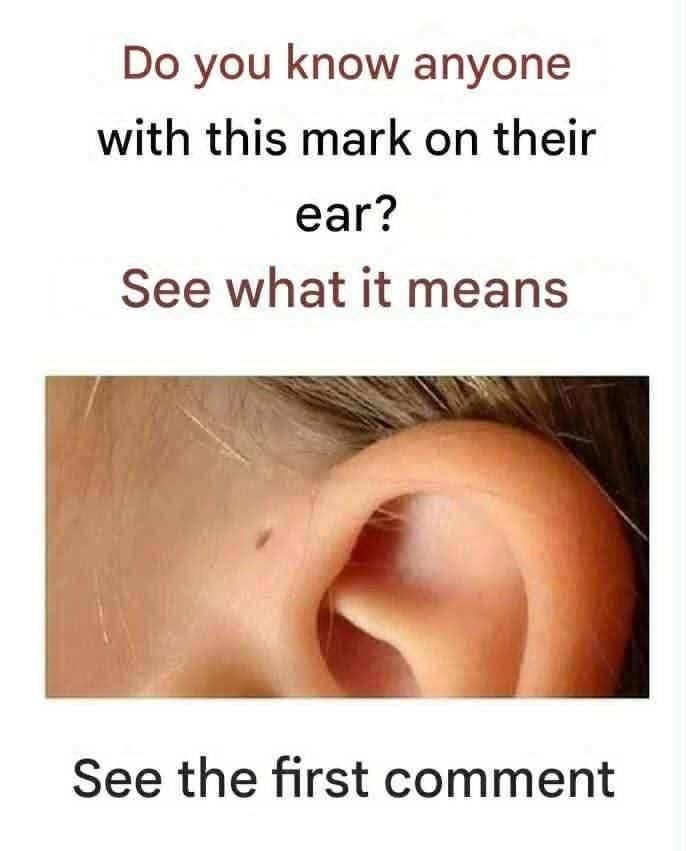
The Fascinating Phenomenon of the Preauricular Sinus
The human body is a remarkable repository of genetic diversity, intertwined with the narrative of our evolutionary journey that spans countless generations. Amidst the array of striking physical characteristics such as heterochromia and polydactyly, there exist subtle, often overlooked features that can hold significant meaning. One such intriguing anomaly is the preauricular sinus (P.A.S.), a tiny pit or dimple situated at the intersection of the face and upper ear cartilage. To the untrained eye, this minor feature may be mistaken for a benign mole or a residual mark from a piercing. However, it serves as a fascinating testament to human embryonic development and our shared evolutionary ancestry, drawing connections to vertebrate formation that date back to our earliest ancestors.
Understanding the Preauricular Sinus: Definitions and Origins
Clinically, the preauricular sinus is classified as a small, congenital fistula or epithelial-lined tract. The term ‘fistula’ describes an abnormal connection between epithelial surfaces, and in the case of P.A.S., the tract is typically blind-ended, not connected to other structures but forming a small cul-de-sac beneath the skin. The term ‘preauricular’ specifically refers to its position, indicating it is located in front of the auricle, or the external part of the ear. The visible opening is commonly referred to as a pit or dimple, while the entire tract is termed a sinus or fistula, which may extend several millimeters beneath the surface.
The development of the preauricular sinus occurs during a critical period in early fetal growth, particularly between the fifth and seventh weeks of gestation. At this stage, the external ear, or pinna, begins to take shape through a series of mesenchymal swellings around the first branchial cleft. Collectively known as the Hillocks of His, these six distinct swellings play a crucial role in the formation of the auricle. Proper fusion and migration of these structures are essential for normal ear development; however, when the Hillocks of His fail to merge completely, a small residual cleft may form, leading to the development of the preauricular sinus. This highlights an important concept in embryology: our complex physical features arise from simpler components that must undergo precise processes of fusion and differentiation.
Prevalence and Genetic Considerations
The preauricular sinus is relatively uncommon on a global scale, yet its prevalence varies significantly across different ethnic and geographic populations, suggesting intricate genetic factors at play. For instance, in the United States and Europe, its occurrence is less than 1%, while in certain Asian populations, such as those in Korea and Japan, the rates can range from 4% to 10%. Similarly, studies have indicated that approximately 4% of individuals in various African populations possess this trait. Notably, the condition often appears unilaterally (on just one ear), although around 25-50% of cases are bilateral, affecting both ears. There is a slight preference for the right ear in unilateral cases, but this observation lacks a statistically significant backing.
A key characteristic of the preauricular sinus is its strong hereditary nature, as it frequently runs in families. This trait is typically inherited in an autosomal dominant manner, meaning only one copy of the associated gene is necessary for the trait to manifest. However, the phenomenon of incomplete penetrance complicates its inheritance; not every individual who carries the gene will display the sinus. Various environmental factors, genetic modifiers, and random developmental occurrences can influence whether the preauricular sinus forms. Consequently, this genetic characteristic may skip generations or present differently within families.
Clinical Implications and Management of the Preauricular Sinus
For the majority of individuals with a preauricular sinus, the condition remains asymptomatic, posing no health risks and requiring no medical intervention. Most cases are discovered incidentally during routine physical examinations. Nevertheless, it is essential to acknowledge that the P.A.S. is not merely a cosmetic concern; it represents a small, inverted pocket of skin that can become problematic. The epithelial lining of the sinus can accumulate dead skin cells and sebum, potentially leading to obstructions.
When the external opening of a preauricular sinus becomes blocked, it creates an ideal environment for bacterial growth, leading to complications such as infections characterized by redness, swelling, and pain, often developing into abscesses. In some cases, the accumulation of materials can result in the formation of preauricular cysts—soft, fluid-filled sacs that may enlarge over time. Recurrence of infections is a frequent challenge, necessitating careful management to prevent chronic issues. If infections persist, surgical excision may be necessary to remove the entire epithelial-lined tract, reducing the risk of future complications.
The Evolutionary Significance of the Preauricular Sinus
The preauricular sinus has captured the interest of evolutionary biologists, leading to various speculative theories regarding its evolutionary roots. One of the most notable theories, proposed by biologist Neil Shubin, suggests that the P.A.S. may be an atavism—a trait that has resurfaced after disappearing in evolutionary history. Shubin posits that the preauricular sinus could represent a remnant of the gill structures present in our aquatic ancestors, linking it to our shared evolutionary past with fish. This hypothesis rests on the embryological development of the P.A.S., which corresponds to the location of structures that develop into gills in fish embryos.
However, this perspective has been met with skepticism from the scientific community, where prevailing views assert that the P.A.S. is simply the result of a developmental anomaly linked to the fusion of mammalian ear structures. While the idea of evolutionary remnant is intriguing, the complexities involved in such a biological leap remain largely unsupported by empirical evidence. The discussion around the preauricular sinus serves as a fascinating example of how modern science continues to explore the intricate interplay between our genetic makeup and our evolutionary journey.
















