
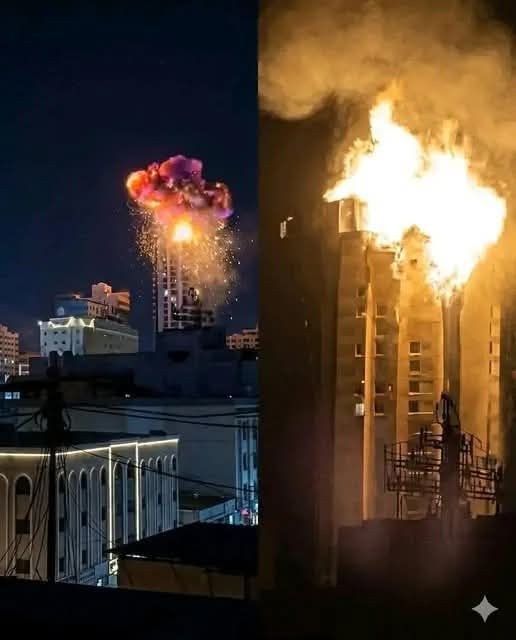
Escalating Tensions: The Recent Allegations of Iranian Missile Strikes on U.S. Military Bases
In recent days, a surge of reports has emerged across social media and various news outlets concerning alleged missile strikes by Iran targeting multiple U.S. military installations situated throughout the Persian Gulf region. These sites reportedly include significant facilities in Qatar, the United Arab Emirates (UAE), Bahrain, Kuwait, Saudi Arabia, and beyond. As the details surrounding these claims vary considerably in both specificity and accuracy, it is essential to dissect the situation with a focus on verified information sourced from reputable defense authorities and established news organizations.
The Context of Ongoing Conflict
To fully grasp the implications of these alleged missile incidents, it is vital to recognize that they are not isolated occurrences. Rather, they unfold against the backdrop of a prolonged, multifaceted conflict that has seen escalating hostilities between Iran and a coalition of U.S. and allied forces, particularly Israel. This confrontation has manifested in various forms, including a significant military campaign led by the U.S. and Israel targeting Iranian military infrastructure. Reports from U.S. Central Command indicate that nearly 2,000 targets within Iranian territory have been struck in an effort to impair Iran’s missile and drone capabilities.
Moreover, Iran’s response has included retaliatory missile and drone strikes across the broader Middle East, targeting not only U.S. assets but also facilities in Gulf states that host American forces, as well as civilian energy infrastructure. This escalating military engagement is characterized by analysts as one of the most severe confrontations between Iran and U.S.-aligned entities in recent history, with significant ramifications for regional stability.
Confirmed Iranian Actions Against U.S. Interests
As the situation evolves, multiple reliable sources have provided insights into specific incidents reported over the past days. For example, on March 3, 2026, the Qatari Ministry of Defence confirmed that at least two Iranian ballistic missiles were launched towards Qatari territory. While one missile was intercepted by Qatari air defenses, the other struck the perimeter of the Al Udeid Air Base, a crucial hub for U.S. operations in the region. Fortunately, there were no casualties reported, with officials stating that operational activities at the base continued uninterrupted.
Additionally, Iranian missile and drone strikes have impacted other U.S. military sites and allied facilities in various Gulf nations. Notably, missiles struck near the U.S. Navy’s Fifth Fleet headquarters in Bahrain, leading to the interception of numerous incoming threats, although one civilian fatality was reported as debris fell in populated areas. In Kuwait, numerous drone strikes were reported near U.S. facilities, with regional air defenses managing to intercept many of the incoming threats. Reports from both the UAE and Saudi Arabia have also indicated damage to infrastructure caused by Iranian drones and missiles, although many details remain under scrutiny and verification.
Casualties and Unverified Claims
Tragically, the conflict has also resulted in loss of life. In a documented incident, a drone attack carried out by Iranian-aligned forces on a U.S. logistics operations center at Port Shuaiba in Kuwait led to the deaths of six American soldiers. This attack has been one of the few confirmed instances where U.S. military personnel have lost their lives amid the escalating tensions. However, it is crucial to distinguish between verified incidents and unconfirmed claims circulating on social media.
Despite widespread allegations of simultaneous missile strikes targeting various U.S. bases—such as Al Dhafra Air Base in the UAE and others across the region—there remains no official confirmation from the U.S. Department of Defense or allied defense ministries regarding these events as a coordinated attack. The verification of these claims is critical, as many reports blend confirmed military retaliation with civilian damage incidents, potentially distorting the overall understanding of the situation.
Aviation Disruptions and Civil Safety
In light of the recent military exchanges, several national aviation authorities have implemented temporary airspace restrictions and disruptions as precautionary measures. Countries such as the UAE, Qatar, and Kuwait have reported flight delays and airspace closures due to missile and drone activity. Some aviation authorities, including Pakistan’s civil aviation authority, confirmed that their airspace remained open during this period of regional tension, highlighting the complexities of air traffic management amid military operations.
How Conflicts Are Verified
In the realm of conflict reporting, particularly when dealing with military incidents of this magnitude, analysts rely on a variety of sources for credible, multi-faceted confirmations. Official defense statements from relevant government bodies, including the U.S. Department of Defense and the defense ministries of affected nations, serve as foundational sources of information. Independent monitoring through International Notices to Airmen (NOTAMs) and aviation advisories also provide essential records of airspace status.
Moreover, commercial satellite imagery plays a pivotal role in assessing the real-world impacts of military strikes, allowing for before-and-after analyses of impacted sites. Finally, respected news agencies, such as Reuters, AP, and Al Jazeera, are critical for providing fact-checked accounts that incorporate both official statements and on-the-ground verification. When multiple independent sources corroborate an event, it is deemed highly reliable.
Recommendations for Residents
For residents in or near the Gulf region, it is essential to adhere to official emergency guidance during periods of heightened military tension. Authorities urge individuals to:
- Follow instructions from government emergency authorities and civil defense, as these directives are crucial for ensuring safety.
- Monitor civil aviation advisories for real-time updates on flight safety and airspace status.
- Rely on verified news organizations rather than unsubstantiated social media posts to stay informed about developments.
- Stay updated through official embassy communications regarding safety alerts and evacuation procedures.
Final Thoughts: Confirmed Developments vs. Ongoing Verification
As the situation continues to develop, it is clear that Iranian missiles have indeed impacted areas associated with U.S. military installations in the Gulf region. Several Gulf states have engaged in hostilities that involve missile and drone activity. However, not every claim circulating on social media has been substantiated through official channels. The most reliable information is emerging from established international news agencies and official defense sources, underscoring the importance of seeking accurate reports in rapidly evolving scenarios. As the situation unfolds, vigilance and reliance on verified information will be essential for understanding the full scope of these developments.
















