
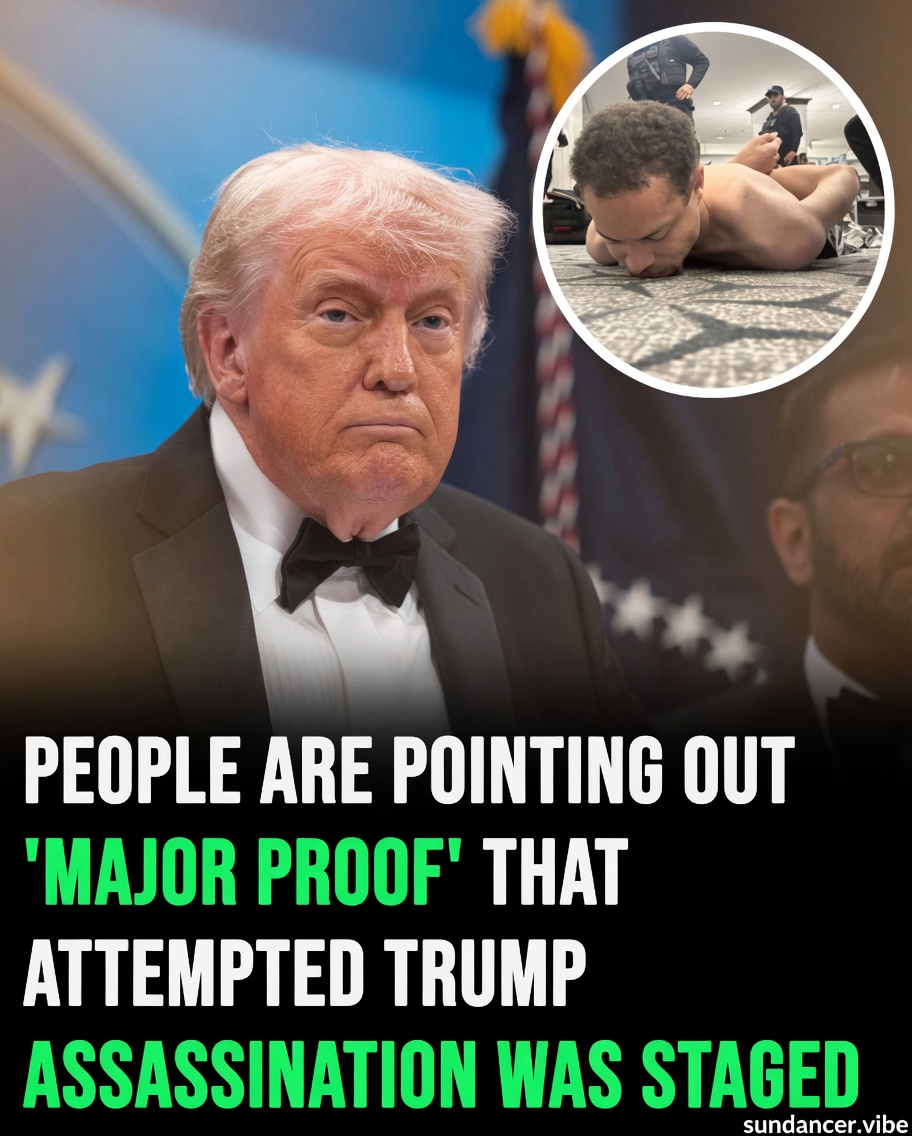
The White House Correspondents’ Dinner Incident: An Examination of Reality and Speculation
In the wake of the troubling incident that transpired at the White House Correspondents’ Dinner, where an armed individual reportedly attempted to infiltrate high-security areas, a complex web of narratives began to emerge online. This incident raised serious concerns regarding security protocols and the potential vulnerabilities that allowed such a frightening scenario to develop. While law enforcement agencies devoted their efforts to unraveling the facts surrounding the event and its ongoing investigation, social media platforms quickly became a breeding ground for sensational claims. These unfounded theories suggested that the incident was potentially staged, gaining momentum despite the absence of corroborative evidence. A pivotal moment in this narrative centered around a widely circulated video clip featuring Karoline Leavitt, which sparked further speculation. The incident highlights the intersection of reality and rumor in an age dominated by digital communication.
The individual at the heart of the incident was identified as Cole Tomas Allen, who, according to authorities, entered the venue armed with a shotgun, a handgun, and a collection of knives. Reports detail that he made a determined attempt to breach a security checkpoint, resulting in an exchange of gunfire with law enforcement before he was subdued and taken into custody. This immediate response from security personnel highlights the gravity of the situation, which law enforcement is treating as a serious attempted attack. Among the attendees were notable figures, including former President Donald Trump and his wife Melania Trump, both of whom were swiftly escorted to safety amidst the chaos. Such high-profile guests in attendance only added to the tension of the moment, drawing significant media attention and public interest in the unfolding events.
Amid the unfolding drama, a significant shift occurred online, with social media users beginning to interpret Leavitt’s earlier comments during the event as a foreshadowing of the attack. While she had playfully mentioned that there would be “some shots fired tonight in the room,” referring to the customary comedic jabs that characterize such dinners, her words were misconstrued to imply foreknowledge of the violent incident. This misinterpretation rapidly morphed into broader conspiracy theories, which, despite lacking any factual basis, garnered considerable traction. It is crucial to note that no verified evidence supports these claims, and authorities have not indicated any foundation for these theories. The phenomenon underscores how humor – often a tool for easing nerves at such events – can be weaponized when violence enters the narrative, leading to a breakdown in rational discourse.
Experts involved in the investigation, including Todd Blanche, stress that their focus remains on physical evidence, eyewitness accounts, and materials linked to Allen. Preliminary insights suggest that the suspect may have intended to target members of the administration, with sources indicating that he likely had plans that included aiming at the president himself. Investigators are diligently reviewing a manifesto and digital records believed to detail his motivations and strategic planning leading up to the incident. Significantly, Jeanine Pirro confirmed that Allen is facing multiple federal charges, with expectations of additional charges as the investigation unfolds. As the investigation progresses, it becomes increasingly clear that the motivations behind such acts of violence are multifaceted and require thorough examination to understand their implications fully.
The seriousness of the situation cannot be overstated. Officials have consistently characterized the occurrence as a genuine security breach, one that was contained due to the swift actions of security personnel. This official stance starkly contrasts with the rampant online speculation, which persists despite the lack of supporting proof. The proliferation of these theories underscores a broader phenomenon observed in our digital age: narratives can swiftly diverge, especially during high-stakes events involving political figures. A single phrase, taken out of context, can quickly morph into a catalyst for widespread claims, even when those claims directly contradict verified information. This incident serves as a cautionary tale about the potency of misinformation and the responsibilities that come with sharing information in a hyper-connected world.
This incident exemplifies how rapidly misinformation can spread, particularly during moments of crisis. A humorous phrase such as “shots fired,” commonly used in jest during events of this nature, became an anchor point for speculation once reality took a darker turn. Experts have noted that during unsettling events, individuals often seek patterns or explanations that provide a sense of clarity or control. This instinctual response can, unfortunately, result in the amplification of misleading narratives. The unfolding events surrounding the White House Correspondents’ Dinner serve as a pertinent case study in how swiftly unverified interpretations can escalate, particularly when sensational video clips and quotes are disseminated without full context. The blend of humor and tragedy at such events can create a volatile atmosphere where misinterpretations thrive.
In parallel with the social media frenzy, investigators are concentrating on reconstructing the timeline of events, particularly how Cole Tomas Allen gained access to the venue equipped with weapons. Initial reports suggest he may have checked into a nearby hotel before the event, potentially circumventing more stringent security measures. This aspect of the investigation is poised to become a focal point as authorities reassess security protocols and identify vulnerabilities that allowed such an incident to occur. Public officials have emphasized the importance of reliance on verified information in such fluid situations, reminding the public that speculation must give way to facts when addressing real threats. The challenges faced by security agencies in the wake of this incident will likely prompt reviews and updates to existing protocols at high-profile events across the nation.
As investigations progress, more details regarding the suspect’s background, intentions, and actions leading up to the event are anticipated to emerge. The contrast between the official findings and the rampant online speculation highlights a critical issue—how information is perceived, shared, and sometimes distorted in real-time. While the incident itself was alarming and serious, the ensuing conversation has proven to be expansive and shaped as much by public perception as by established facts. In an era where narratives can shift rapidly, the importance of maintaining a commitment to accuracy and critical thinking in the face of sensationalism has never been more essential. This incident is not just about a singular attack, but rather a reflection of the societal challenges we face in navigating a world inundated with information that is often unchecked and unreliable.
















