In today’s article, we bring you a deeply emotional story about a man who lost his wife and newborn son seven years earlier, only to discover during an unexpected encounter that healing, forgiveness, and reconciliation were still possible after years of silence.
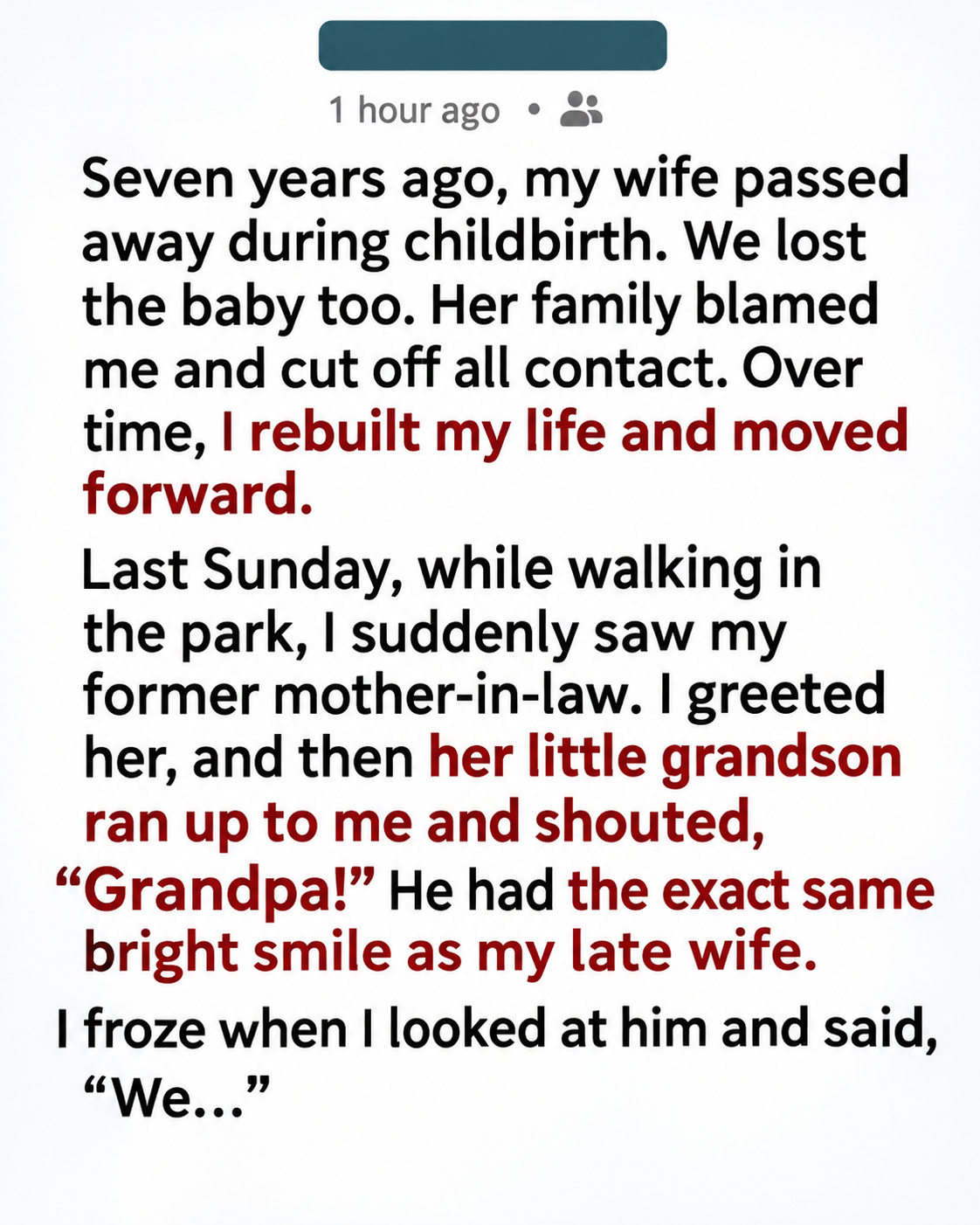
Seven years had passed since the tragedy that completely changed his life. Losing his beloved wife, Emily, and their newborn son within a short period left him struggling to understand how everything they had dreamed about could disappear so suddenly. Instead of returning home with his growing family, he faced funeral arrangements, overwhelming grief, and an uncertain future.
His suffering became even greater when Emily’s parents began blaming him for what had happened. They questioned his decision to support their daughter’s preference for natural childbirth and believed he should have recognized the seriousness of the situation earlier. Their accusations deeply wounded him, especially because he was already questioning whether anything could have been done differently.
Following the funeral, communication between them gradually disappeared. Family gatherings became distant memories, and the silence continued for seven long years.
Eventually, he began rebuilding his life and entered a relationship with a woman named Claire. One afternoon, while they were walking through a park, he unexpectedly noticed Emily’s mother sitting on a bench. Her appearance had changed considerably, but he recognized her immediately.
Gathering his courage, he approached her and offered a polite greeting. Their conversation initially consisted of ordinary questions about health and everyday life. Neither seemed comfortable mentioning the tragedy that had once connected them.
Suddenly, a little boy ran toward the woman, enthusiastically calling her grandmother. The man was surprised, particularly because something about the child’s smile reminded him of Emily.

After seven years of separation, he discovered that the family he had once considered his own had undergone a significant transformation, finding renewed happiness through the arrival of a child.
His former mother-in-law explained that she and her husband had adopted the boy three years earlier. Following the devastating loss of their daughter and grandson, their home had become painfully quiet. Raising a child had gradually brought laughter, responsibilities, and renewed purpose into their daily lives.
They had named him Mike, in memory of the grandson they had lost.
As the conversation continued, Emily’s mother finally addressed the painful subject they had avoided for years. She acknowledged that she and her husband had treated him unfairly following the tragedy. Their grief had been overwhelming, but she understood that their suffering did not justify blaming him.
She told him something he had waited seven years to hear: she no longer held him responsible for the deaths of Emily and their son.
For years, he had imagined receiving such an apology. Yet when the moment finally arrived, words seemed insufficient to express everything he felt.
An apology cannot erase years of suffering, but acknowledging an injustice can open a door that once appeared permanently closed. Sometimes, reconciliation begins with the courage to admit that we have hurt someone who was suffering just as deeply as we were.
Meanwhile, little Mike began showing him his collection of football stickers. Their simple conversation helped ease the tension, allowing the adults to experience a moment of genuine warmth.
Before leaving the park, his former mother-in-law invited him to dinner the following Saturday. Although he understood that rebuilding their relationship would require patience, honesty, and mutual effort, he accepted the invitation.
He knew that neither the passage of time nor their reconciliation could replace Emily and their son. Mike was not a replacement for the child they had lost, but an individual with his own future, personality, and dreams.
This touching narrative, whose authenticity has not been independently verified, reminds us that grief can sometimes create distance between people who once shared profound affection. However, accepting responsibility for hurtful behavior and offering a sincere apology may create opportunities for renewed understanding.

Moving forward does not mean forgetting those who are gone. It means allowing ourselves to experience happiness again while preserving the memories of those we will always love.
If someone who had unfairly blamed you for a family tragedy finally apologized after seven years, would you give them another chance?