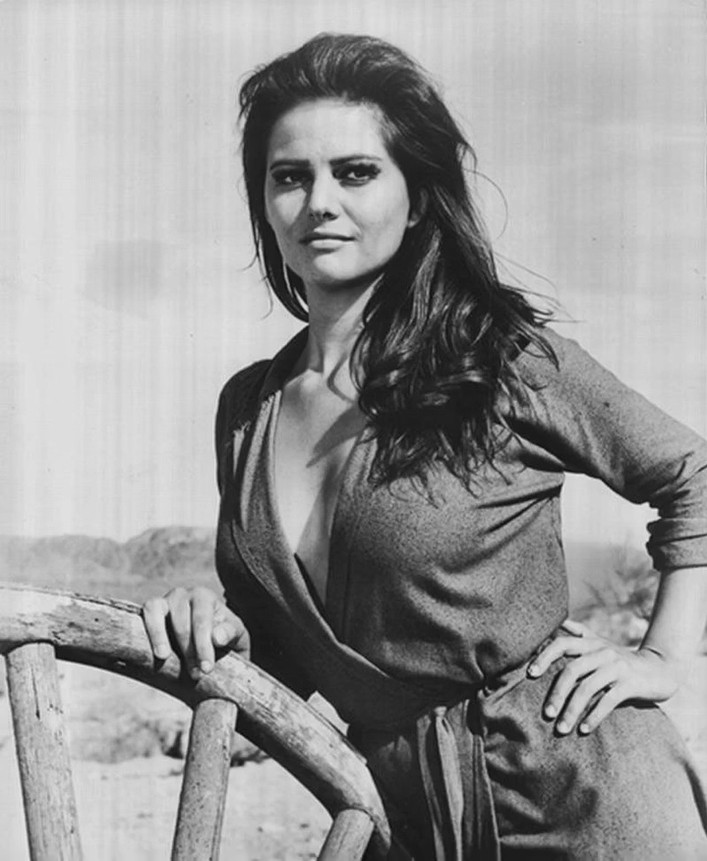
The Enduring Legacy of Claudia Cardinale: A Cinematic Icon
Claudia Cardinale, a towering figure in the realm of both Italian and international cinema, established a legacy over her remarkable six-decade career that continues to resonate within the film industry. Born as Claude Joséphine Rose Cardinale on April 15, 1938, in La Goulette, French Tunisia, she was nurtured in a multicultural environment, with Sicilian roots that would later influence her artistic journey. Cardinale’s rise to fame began unexpectedly when she won the title of “Most Beautiful Italian Girl in Tunisia” at the tender age of 19 in 1957, which served as a springboard into the world of film. This pivotal moment not only granted her a trip to Italy but also caught the attention of prominent film producers eager to discover her potential as an actress.
Her film debut came just a year later in 1958, with the feature film Goha, where she shared the screen with the renowned Egyptian actor Omar Sharif. This initial role marked her entry into the international film scene, setting the stage for her to sign a contract with Vides, a production company helmed by the influential Italian producer Franco Cristaldi, who played a crucial role in her early career. Cardinale’s talent flourished in the vibrant landscape of Italian cinema, as her performances in films like Big Deal on Madonna Street (1958) showcased her ability to blend humor with depth, quickly earning her widespread recognition. This early success laid the groundwork for a career that would see her evolve into one of the most celebrated actresses of her time.
As the 1960s unfolded, Claudia Cardinale carved out a niche as one of Europe’s most sought-after actresses. Her performances in landmark films such as Federico Fellini’s 8½ and Luchino Visconti’s The Leopard, both released in 1963, solidified her status as a cinematic icon. These films not only highlighted her remarkable range but also positioned her as a symbol of Italian cinematic excellence, captivating audiences with her emotional depth and commanding presence. The Leopard, in particular, is often regarded as a masterpiece, with Cardinale portraying the beautiful and tragic figure of Angelica, a character caught in the throes of political change. The film’s lush cinematography and Cardinale’s compelling performance played a pivotal role in its critical acclaim. This period also saw her venture into Hollywood with roles in major productions like The Pink Panther, where she starred alongside legends like Peter Sellers, further solidifying her international appeal.
Despite her rising fame in the Hollywood sphere, Cardinale remained true to her artistic convictions, often choosing roles that emphasized character depth over superficial glamour. Her portrayal in Sergio Leone’s epic western Once Upon a Time in the West (1968) is often cited as one of her most iconic performances, where she skillfully combined emotional intensity with her unparalleled screen presence. In this film, she played Jill McBain, a woman who embodies strength and resilience in a harsh, unforgiving environment. The film itself became a landmark in the Western genre, and Cardinale’s performance was integral to its success. As the decades progressed, Claudia’s career continued to flourish, as she delved into diverse genres across both European and American cinema, continuously expanding her horizons and artistic range.
Behind the glitz of her public persona lay a complex personal life marked by challenges. Cardinale’s early motherhood came with secrecy, as she gave birth to her son Patrick in London in 1958, keeping his identity hidden from the public for years. Her marriage to Cristaldi in 1966 highlighted both a tumultuous personal relationship and a professional partnership that ultimately unraveled, culminating in divorce in 1975. Following this, Cardinale sought to redefine her career independently, often collaborating with the Italian director Pasquale Squitieri, an artistic partnership that lasted until his death in 2017. Their relationship was marked by a shared creative vision, yet it also reflected the personal struggles she faced, balancing motherhood, personal ambitions, and the demands of an evolving film industry.
Throughout the late 20th century, Claudia Cardinale’s versatility continued to shine through her film choices. Her performance in Werner Herzog’s Fitzcarraldo in 1982 marked her adaptability across various cinematic traditions, reinforcing her status as a global actress capable of navigating different styles and stories. In this film, Cardinale starred alongside Klaus Kinski in a narrative about ambition and obsession set against the backdrop of the Amazon rainforest. Her ability to portray complex emotional landscapes resonated with audiences, adding depth to the film’s themes. As her career evolved, she became a revered figure not only for her stunning beauty but also for her profound ability to convey emotional narratives and complex characters. While often compared to contemporaries like Sophia Loren and Gina Lollobrigida, Cardinale distinctly carved her own path, characterized by a blend of artistic integrity and depth.
In recognition of her extraordinary contributions to cinema, Claudia Cardinale received several prestigious accolades, including the Golden Lion for Lifetime Achievement at the Venice Film Festival in 1993 and an Honorary Golden Bear at the Berlin Film Festival in 2002. These accolades not only celebrated her artistic achievements but also cemented her status as a cultural icon. Beyond her cinematic accomplishments, she was also a passionate advocate for women’s rights, leveraging her platform as a UNESCO Goodwill Ambassador to promote equality and empowerment. Her advocacy work reflected her deep commitment to social causes, inspiring many and using her influence to foster change. Cardinale’s role as an advocate for women in the film industry and beyond further underscores her impact as both an artist and a humanitarian.
Claudia Cardinale’s life story is one of resilience, creativity, and a spirit of independence that has inspired countless actresses and filmmakers. Her journey spanned various film movements, connecting generations of artists while remaining a prominent figure in European cinema well into her later years. Cardinale’s later film roles, including appearances in Son of the Pink Panther (1993) and Effie Gray (2014), allowed her to continue captivating audiences, bringing her illustrious career full circle. Although she passed away on September 23, 2025, in Nemours, France, at the age of 87, her legacy remains vibrant through her extensive body of work and the profound impact she left on the world of cinema. Even posthumously, her films continue to inspire new generations, ensuring that Claudia Cardinale’s contributions to film, society, and the arts are never forgotten.