Jake Paul: From YouTube Stardom to Boxing Controversy
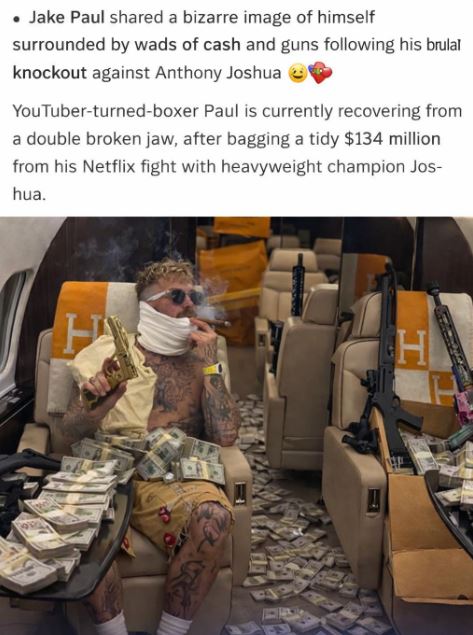
In the ever-evolving landscape of sports and social media, few figures have sparked as much conversation as Jake Paul. The YouTuber-turned-professional boxer has consistently pushed the boundaries of fame and fortune, culminating in a recent incident that has reignited debates about his persona and the implications of his lifestyle choices. Following a highly publicized match against heavyweight champion Anthony Joshua, Paul shared a striking image that encapsulated his controversial lifestyle—a picture of himself surrounded by stacks of cash and an array of firearms. This moment not only emphasizes his brand as a provocateur but also raises significant questions regarding the role of influencers in shaping public perception and cultural norms.
Significant Earnings from a High-Stakes Fight
Paul’s fight with Joshua was not just another bout in the boxing ring; it was a financial bonanza that earned him a staggering $134 million. This impressive sum highlights the lucrative nature of celebrity boxing, where traditional sports narratives meet the sensationalism of social media. The financial stakes are incredibly high, attracting not only seasoned athletes but also influencers looking to capitalize on their fame. For instance, the shift in boxing dynamics can be attributed to numerous high-profile influencers stepping into the ring, such as KSI and Logan Paul, who have also embraced this opportunity for financial gain. However, the aftermath of this fight has been particularly challenging for Paul, as he is currently recovering from a double broken jaw. This severe injury raises questions about the physical consequences of participating in such high-intensity matches and the risks that celebrities may overlook while chasing fame and fortune.
Sadržaj se nastavlja nakon oglasa
The Price of Fame: Recovery and Resilience
Despite the challenges posed by his injury, which necessitated major facial surgery, Paul has shown a remarkable tenacity in his recovery process. Instead of fading into obscurity, he has embraced his situation with typical bravado.
Recently, he shared details of his journey, stating that while he is on the mend, he refuses to let the pain dictate his lifestyle.
From the moment he left Florida on a private flight, he was surrounded by the opulence he has become known for, including designer blankets and luxury shopping bags. This imagery reinforces his branding as a larger-than-life character who thrives on the notion of success and wealth.
His ability to maintain this extravagant lifestyle despite setbacks speaks to a broader trend among influencers who often project an image of invulnerability, enticing their followers to aspire to similar heights of success.
The Provocative Nature of His Social Media Presence
Paul’s recent social media post, featuring him seated amidst a display of cash and firearms, serves as a provocative reminder of his branding as “The Problem Child.” Holding a cigar in one hand and a golden pistol in the other, he captioned the image with a motivational message: “The American Dream.
Start yours today. Believe in it. Fail. Work. Fail. Learn. Fail. Don’t ever stop.” This statement encapsulates his philosophy toward life and success, but it also raises critical eyebrows regarding the glorification of a lifestyle that includes firearms and extreme wealth.
The imagery he crafts is not merely for shock value; it is a calculated move designed to engage his audience, sparking discussions about the nature of dreams and achievement in modern society.
Yet, this approach also begs the question of accountability, as the impact of such messages can ripple through the youth who idolize him.
Public Perception and Criticism
While many of Paul’s fans admire his audacity and confidence, critics often express concerns about the messages he sends to his young audience. The combination of flaunting wealth and showcasing weapons in a single image has drawn ire from various quarters, including parents, educators, and social commentators.
These detractors argue that such displays risk normalizing violence and materialism among impressionable viewers. For example, studies have shown that exposure to similar content can lead to desensitization to violence and a skewed understanding of success based solely on material wealth.
Paul’s lifestyle, characterized by excess, raises questions about responsibility and the social implications of celebrity culture in the digital age. The dichotomy between his success and the potential consequences of his actions illustrates a complex relationship between influencers and their followers.
A Broader Conversation About Influencers in Sports
The phenomenon of influencers transitioning into professional sports is not exclusive to Paul. Many public figures are now leveraging their social media followings to cross over into realms traditionally reserved for athletes. This trend has sparked a cultural shift, where the lines between entertainment, sports, and business are increasingly blurred.
The cases of athletes like Conor McGregor, who has also ventured into business and lifestyle branding, demonstrate a broader trend in which personality and charisma can eclipse traditional skills and training.
As such, the actions of individuals like Jake Paul could have far-reaching consequences, shaping not only their careers but also the very fabric of sports culture. The dialog surrounding this shift is essential as society navigates the complexities of fame, success, and responsibility in the digital age.
It raises the fundamental question of what it means to be an athlete today, especially when the influence of social media is at its peak.
Looking Ahead: What’s Next for Jake Paul?
As Jake Paul continues to recover from his injuries, the future holds many uncertainties for him in both boxing and media. Will he continue to embrace the controversial aspects of his persona, or will he pivot toward a more restrained public image in light of the criticism?
The choices he makes in the coming months will not only impact his career trajectory but also influence how he is perceived by the public and the media.
Regardless of his choices, one thing remains clear: Paul has established himself as a formidable force in the world of celebrity boxing and social media.
His journey highlights the intricate dynamics between fame, wealth, and the responsibilities that come with them, reminding us that the quest for the “American Dream” is as complex as it is enticing.
As the narrative unfolds, both fans and critics alike will be watching closely, eager to see how this multifaceted individual navigates the challenges ahead.