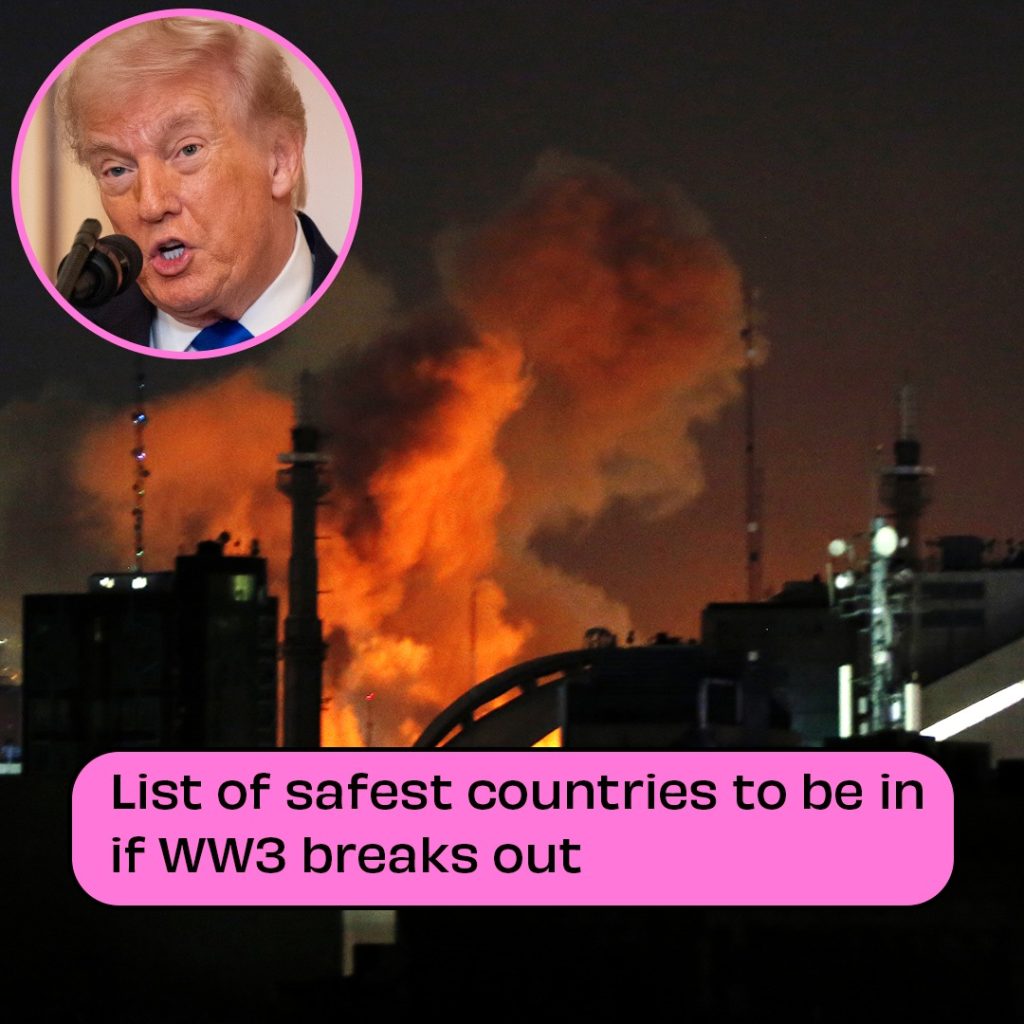
The Global Implications of Recent Military Strikes on Iran
The recent joint military operations by the United States and Israel against Iran have unleashed a wave of turmoil, raising critical questions about global security and geopolitical stability.
The operation, which commenced on February 28, resulted in the death of Iran’s Supreme Leader, Ayatollah Ali Khamenei, an act that has not only triggered retaliatory strikes across the region but has also sent reverberations throughout the international community.
As violence escalated, experts began to contemplate the potential for a third world war and the subsequent effects on the global economy, with sentiments ranging from celebration in some quarters to outrage in others.
The political landscape, deeply entrenched in historical grievances and power dynamics, adds layers of complexity to the unfolding situation.
In light of this escalating crisis, many individuals are left pondering the question: where would one find safety if global conflict were to escalate into widespread warfare? Analysts have identified several key factors that contribute to a nation’s perceived safety during global unrest.
These include a nation’s political neutrality, low levels of militarization, and geographical isolation. According to a report from the Institute for Economics & Peace, the world’s most peaceful nations often showcase characteristics such as robust institutions, minimal involvement in conflicts, and a commitment to diplomatic solutions over military engagements.
For instance, countries like Botswana and Costa Rica exemplify such traits by prioritizing peace and stability through governance models that emphasize human development.
Antarctica: The Ultimate Refuge
Among the safest places on Earth, Antarctica stands out due to its extreme remoteness and lack of permanent residents, with the exception of a few research stations. The continent is devoid of strategic military targets, making it a low-priority location in times of conflict.
In fact, its isolation means that it is unlikely to become embroiled in any military engagements. Some analysts argue that while Antarctic research personnel might face challenges during global turmoil, the overall peace of the region is largely unthreatened.
The Antarctic Treaty System firmly establishes the continent as a zone dedicated to peace and scientific exploration, further insulating it from geopolitical tensions.
Iceland: A Beacon of Peace
Iceland has consistently been at the forefront of global peace rankings, recently securing the top spot on the 2025 Global Peace Index. This marks the 17th consecutive year that Iceland has maintained this prestigious position, a feat attributed to its low levels of militarization and absence of conflict.
Analysts point to the nation’s small population of approximately 370,000 and stable socio-economic environment as crucial factors contributing to its safety. The Icelandic government’s commitment to non-violence and diplomatic solutions further enhances its status as a sanctuary for those seeking refuge from global instability.
Additionally, the country has effectively leveraged its geographical isolation in the North Atlantic to maintain a degree of separation from major global conflicts, positioning itself as a model for peace and diplomacy.
New Zealand: A Geographical Sanctuary
Known for its stunning landscapes and friendly people, New Zealand also ranks high on peace indices, largely due to its geographical isolation and non-involvement in major military conflicts.
Its agricultural self-sufficiency, underpinned by a diverse array of crops and livestock, is seen as a significant advantage in the event of global upheaval.
Industry experts, like Annie Jacobsen, have suggested that in a worst-case scenario, New Zealand and its neighbor, Australia, could be among the few places left relatively unscathed.
Jacobsen emphasized the drastic conditions that could emerge in other parts of the world, where resources become scarce and survival becomes a daily challenge. Furthermore, New Zealand’s strong climate change policies and commitment to sustainability also provide an additional layer of resilience against potential future crises.
Tuvalu: The Remote Island Nation
Tuvalu, a small Pacific island nation, offers another example of a low-risk area in times of global conflict. Its geographical remoteness, coupled with minimal strategic value, makes it an unlikely target for military engagements.
Situated over 3,000 kilometers from the nearest major landmasses, Tuvalu’s lack of military infrastructure further ensures its low-profile status in global geopolitics. While small in size, Tuvalu illustrates how geographical isolation can contribute to a nation’s perceived safety during tumultuous times.
However, the nation faces existential threats from climate change, particularly rising sea levels, which poses a unique paradox for its long-term survivability and safety in the face of global challenges.
Argentina: A Shielded Haven
Meanwhile, Argentina emerges as a noteworthy contender for safety amid global conflicts, thanks to its vast landmass, agricultural capabilities, and strategic distance from potential battlefronts.
Research indicates that Argentina possesses the agricultural resilience needed to withstand the adverse effects of a nuclear winter, making it one of the few nations that could maintain food production under extreme conditions.
A 2022 study published in Nature Food highlighted Argentina’s ability to grow crops that are resistant to changes in sunlight and temperature, reinforcing its position as a safe refuge.
Moreover, Argentina’s diverse climate zones enable it to produce a wide variety of foods, which could be crucial in maintaining food security during global disruptions.
Switzerland: The Neutral Fortress
With a long-standing tradition of neutrality, Switzerland distinguishes itself from its neighbors through extensive civil defense measures and a strong commitment to avoiding military conflict. Swiss law mandates the construction of nuclear shelters in many buildings, providing an additional layer of security to its citizens.
While its geographical proximity to various conflict-prone nations could pose risks in an escalated scenario, Switzerland’s well-developed infrastructure and civilian preparedness strategies contribute to its perception as a relatively safe haven.
The Swiss model, which emphasizes a robust democratic system and active citizen engagement, serves as a testament to the effectiveness of neutrality in promoting national stability.
Looking Ahead
As the situation in Iran evolves, the world watches with bated breath. The potential for further conflict looms large, and global reactions continue to vary widely. Countries such as Bhutan, Chile, Fiji, and South Africa are also discussed as potential safe havens due to their unique geographical and sociopolitical attributes.
Each of these nations possesses distinct qualities that could mitigate the risks associated with global conflict, from geographic isolation to stable governments.
For instance, Bhutan is noted for its Gross National Happiness index, which emphasizes well-being over economic growth, while Chile boasts a relatively high level of economic stability and democratic governance.
In conclusion, while no place can be deemed entirely safe in the face of global upheavals, some nations exhibit traits that make them more resilient to such crises.
As the international community continues to grapple with the implications of military actions and their potential fallout, understanding which countries might serve as refuges can offer a glimmer of hope amidst uncertainty.
The discourse surrounding these potential safe havens not only sheds light on the qualities that contribute to national resilience but also serves as a reminder of the importance of diplomatic engagement and conflict resolution in maintaining global peace.