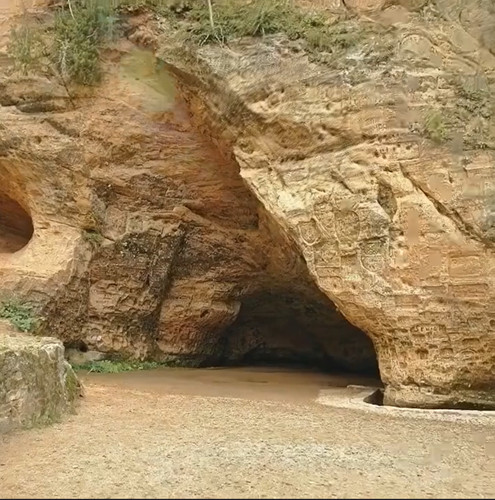
The Subterranean Artistry of Ra Paulette: A Testament to Human Craftsmanship
In an age where the rapid pace of technological advancement dominates daily life, the work of Ra Paulette emerges as a unique breath of fresh air. At 67 years old, Paulette has spent nearly 40 years dedicated to the meticulous craft of carving extraordinary subterranean spaces within the sandstone hills of Northern New Mexico. Utilizing simple hand tools and an unwavering commitment to his vision, he transforms raw stone into immersive environments that inspire awe and contemplation. Each cave he carves is less about construction and more about a profound revelation—a process of unveiling the beauty that lies dormant within the stone.
Describing Paulette’s work merely as “cave carving” would be an injustice to the full experience it offers. His creations are not static structures but instead dynamic landscapes that invite visitors to engage deeply with their surroundings. Each element of his design flows organically, with walls that undulate like the surface of a gentle sea and columns that seem to emerge from the very earth. Critics and visitors alike have remarked on the way sunlight filters through strategically placed openings, casting a warm glow that transforms the subterranean chambers throughout the day. This interplay of light and shadow imbues each space with a sense of life, creating a sanctuary that feels timeless and alive.
The Artistic Philosophy of Connection
Ra Paulette’s artistic philosophy is steeped in a profound respect for the natural world. He approaches sandstone as a partner rather than a material to be conquered. “I’m not carving the cave,” he states in interviews, emphasizing that his mission is to reveal the inherent beauty of the stone. This perspective necessitates an extraordinary level of patience and adaptability. Paulette begins each project by closely observing the stone’s natural features, spending days walking the site, tapping the surfaces, and envisioning the relationship between light and shadow before even picking up a chisel.
His tools are refreshingly simple: chisels, hammers, and hand drills. Paulette eschews heavy machinery and explosives, relying instead on his physical strength and artistic vision to shape the stone. This dedication to hand craftsmanship lends the caves their unique character, with subtle imperfections that reflect the human touch blending seamlessly with the natural variations of the stone itself. Each cave becomes a co-creation, a dialogue between Paulette and the rock, where the stone suggests shapes that he carefully listens to and carves.
Multisensory Experiences and Emotional Resonance
Paulette often incorporates elements such as water into his designs, allowing natural streams or channels to flow gently through the carved spaces, enhancing the sensory experience. The soft sound of trickling water combined with the organic curves of the stone creates an atmosphere conducive to meditation and introspection. Visitors frequently report feelings of serenity and a sense of timelessness, as if stepping into a world where modern distractions fade away. This emotional resonance is a vital aspect of Paulette’s caves, with many describing their experiences as akin to a meditative retreat.
Despite his extraordinary talent and the acclaim garnered through the documentary Cavedigger, which highlights both his process and the physical toll of his craft, Paulette has remained largely indifferent to fame. He does not seek to showcase his work in galleries or sell it in traditional art markets; instead, he invites visitors to engage with his creations actively. The caves are meant to be walked through, touched, and lived within—truly a form of “living art.” Each curve and alcove encourages a personal exploration, revealing details that speak to those who take the time to notice.
The Challenges of Traditional Craftsmanship
Working with sandstone, while rewarding, is not without its challenges. The stone is relatively soft, making it easier to carve but also unpredictable, requiring Paulette to assess its integrity continually. Misjudgments can lead to cracks, meaning each project becomes a complex puzzle that blends artistic vision with engineering insight. Paulette’s dedication to handwork ensures that every cave is not only a manifestation of beauty but a demonstration of resilience and creativity in the face of natural resistance.
Over the years, Paulette has completed more than a dozen caves, and each one is a journey—a process that teaches him as much as it produces a finished piece. Faced with challenges, he views mistakes as opportunities for discovery, often leading to innovative solutions that enhance the interaction between stone and space. This iterative approach reflects his belief that art is not static; rather, it evolves through experience, transforming both the creator and the audience.
A Sanctuary for Reflection
Ra Paulette’s caves are more than artistic endeavors; they serve as sanctuaries, inviting visitors to pause and connect with a sense of wonder. Each cave tells a story through its forms, curves, and the interplay of light and shadow, creating a unique narrative that resonates with those who step inside. Some of his projects have been commissioned by individuals seeking a personal retreat, while others are designed for public appreciation, showcasing the profound beauty of these subterranean spaces.
As visitors traverse through the twisting corridors and vaulted ceilings, they often find themselves stopping mid-step, utterly captivated by the tactile quality of the stone and the harmonious choreography of light. Paulette’s work challenges the notion of art as something to be observed from a distance; instead, it invites engagement and interaction, fostering a deeper connection between the viewer and the environment.
A Counter-Narrative to Modern Life
In a world increasingly focused on speed and efficiency, Paulette’s dedication to slow, painstaking craftsmanship serves as a powerful critique of modern culture. His work emphasizes the value of time and attention to detail, reminding us that true artistry cannot be rushed. The process of creating each cave often spans weeks, months, or even years, reflecting a commitment to quality and integrity that stands in stark contrast to the fast-paced nature of contemporary life.
Ultimately, Ra Paulette’s art transcends mere aesthetics. It embodies a transformative dialogue between human creativity and the natural world, encouraging us to engage deeply with our surroundings. Through his caves, Paulette teaches us about patience, care, and the beauty that can be revealed when we slow down and listen—not only to the materials but also to our own inner selves. In a society that often prioritizes fleeting moments and digital distractions, Paulette’s work invites us to reconnect with the profound beauty of the earth and the timeless potential of human artistry.