The Controversy Surrounding Vladyslav Heraskevych’s Disqualification at the Milano Cortina 2026 Winter Olympics
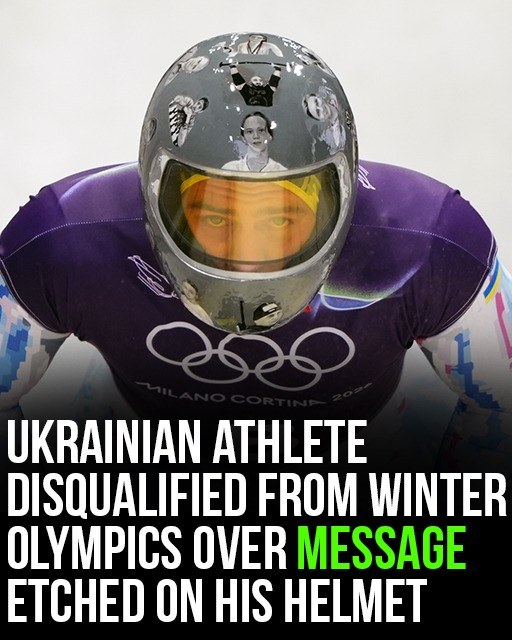
On February 12, 2026, just moments before the men’s skeleton competition was set to commence at the Milano Cortina Winter Olympics, Ukrainian athlete Vladyslav Heraskevych faced a devastating turn of events. The International Olympic Committee (IOC) disqualified him from the competition based on his refusal to remove a custom-designed helmet meant to honor fellow Ukrainians who lost their lives in the ongoing war with Russia. This decision has ignited a fervent debate surrounding the intersection of sports, political expression, and the essence of remembrance during times of international conflict.
Heraskevych’s helmet, which he referred to as a “helmet of remembrance,” displayed over 20 portraits of notable Ukrainian athletes and civilians, including children, who have been killed since Russia escalated its military campaign against Ukraine in 2022. For Heraskevych, this helmet was not merely an accessory but a poignant tribute that aimed to preserve the memory of those who have sacrificed their lives. He emphasized that his intention was not to engage in political protest but rather to honor the fallen, stating on social media, “This is the price of our dignity.” In his view, prioritizing the tribute over the pursuit of medals reflected a deeper commitment to the ideals of humanity and sportsmanship.
The IOC’s Stance and Rule 50
Despite Heraskevych’s intentions, the IOC categorized his helmet as a violation of Rule 50 of the Olympic Charter, which explicitly prohibits political, religious, or racial demonstrations during competitions. This regulation is designed to maintain a sense of neutrality in the Olympic arena, ensuring that the focus remains on athletic performance rather than political controversy. The IOC’s leadership, including President Kirsty Coventry, held a series of discussions with Heraskevych to explore potential compromises that would allow him to compete while adhering to the charter’s guidelines. Although Coventry recognized the powerful message behind the helmet, she stressed the necessity of compliance with Olympic regulations, underscoring the IOC’s commitment to uphold its rules, even in the face of emotional and significant cultural expressions.
In an attempt to resolve the situation, the IOC proposed alternatives, including wearing a black armband as a symbolic gesture of remembrance. However, Heraskevych remained steadfast in his decision to wear the helmet, asserting that it was an appropriate form of tribute that aligned with the spirit of the Olympics. His refusal to compromise ultimately led to his disqualification and the revocation of his Olympic credentials, stripping him of the opportunity to compete and access to other Olympic facilities. The implications of this fallout were significant, not only for Heraskevych personally but also for the portrayal of athletes as advocates for social causes.
Public and Institutional Reactions
The fallout from Heraskevych’s disqualification was immediate and widespread, inciting reactions not only from sports officials but also from the broader public and international community. The Ukrainian National Olympic Committee publicly supported Heraskevych, arguing that his helmet did not breach any Olympic rules since it lacked political slogans or inflammatory content. They emphasized that the helmet was crafted in collaboration with Ukrainian artists, underscoring its cultural and emotional significance. This support from national bodies highlights the growing trend of athletes using their platforms to address pressing social issues, a practice that has become more common in recent years.
Moreover, this incident has drawn comparisons to historical instances where athletes have utilized their platforms to bring attention to critical social issues and human rights. For example, the iconic raised fist of Tommie Smith and John Carlos at the 1968 Mexico City Olympics served as a powerful symbol of protest against racial injustice in the United States. Many commentators noted that the IOC’s strict enforcement of Rule 50 appeared inconsistent, given previous cases where athletes were permitted to express their beliefs without facing similar repercussions. This inconsistency has fueled a broader discussion about how sports institutions navigate the complexities of political expression amid global crises. Critics argue that the IOC’s rigid stance on Heraskevych’s gesture undermines the very spirit of the Olympics, which professes values of unity and peace.
Legal Appeals and Future Implications
In the wake of his disqualification, Heraskevych and his team announced their intention to appeal to the Court of Arbitration for Sport (CAS). The appeal sought to either reinstate him in time for upcoming competitions or allow him a supervised run while the case was reviewed. The urgency of the appeal was underscored by the scheduled skeleton racing events in the days following the disqualification. As of the last reports, the outcome remained uncertain, but Heraskevych’s determination to advocate for his beliefs and challenge the IOC’s interpretation of its rules has underscored the broader implications of this incident. The case has the potential to set a precedent regarding the balance between compliance with Olympic regulations and the right to personal expression, particularly in the context of humanitarian issues.The disqualification of Vladyslav Heraskevych from the Milano Cortina 2026 Winter Olympics serves not only as a poignant reminder of the current state of geopolitical tensions but also highlights the complex relationship between sports and societal values. While Olympic competitions strive to uphold ideals of unity and neutrality, the emotional realities faced by athletes, particularly from war-torn nations, call into question the appropriateness of such regulations. The situation raises critical discussions about the role of international sports in addressing global issues. As global audiences continue to grapple with the implications of this incident, it stands to define not only Heraskevych’s legacy but also the evolving narrative of the Olympic Movement in a world increasingly aware of its social responsibilities.
In conclusion, as the world watches the ramifications of this disqualification unfold, it is clear that the conversation surrounding sports and political expression is far from settled. The lingering question remains: how should international sporting bodies respond to the fundamental right of athletes to honor their beliefs and backgrounds? As sports continue to evolve, the legacies of athletes like Heraskevych will shape the future of the Olympics, illustrating the persistent struggle for voice and representation in the face of adversity.