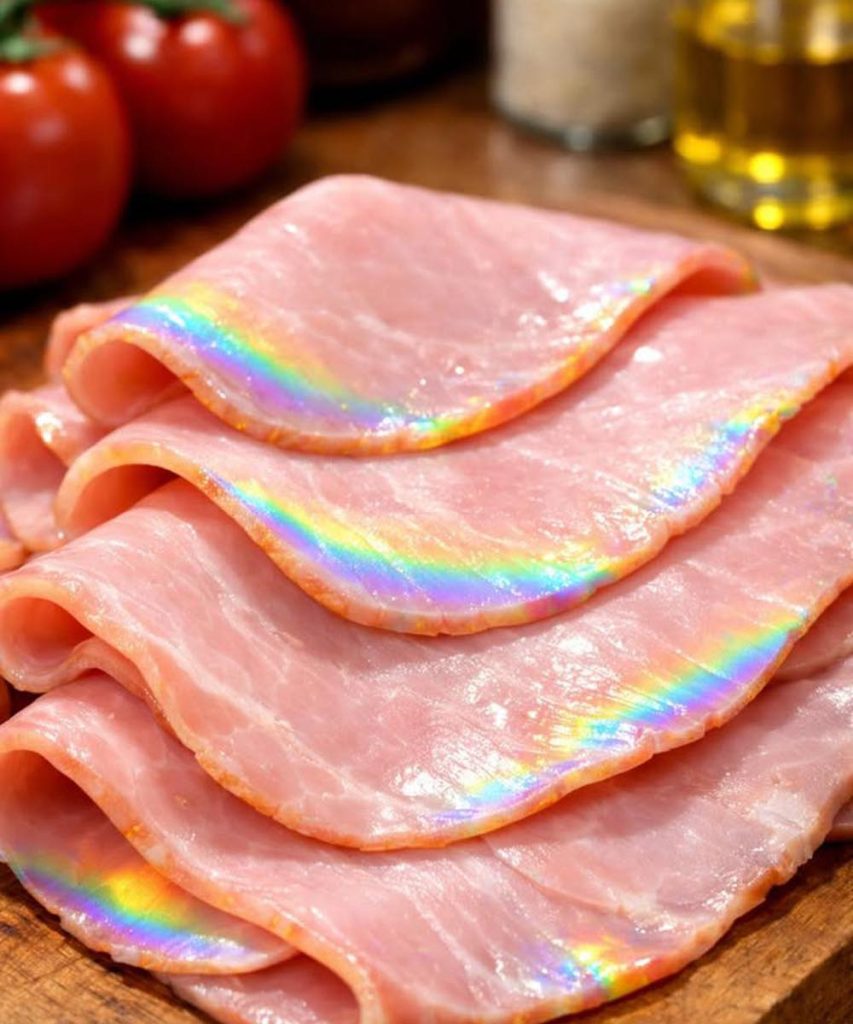
The Science Behind the Rainbow Sheen on Deli Ham
Have you ever noticed a shimmering, rainbow-like effect on a slice of deli ham when you take it out of the refrigerator? This phenomenon, while visually interesting, can cause some concern about the freshness of the meat. In this article, we will explore the science of iridescence in deli ham and other meats, helping you understand why this effect occurs and when it is perfectly normal. We will also provide essential tips for identifying spoiled meat and guidance on buying and storing deli products to ensure their quality and safety.
Understanding Iridescence: A Natural Phenomenon
The captivating, multicolored sheen on deli ham is known as iridescence. This optical effect occurs when light interacts with the surface structure of the meat, creating a spectrum of colors similar to what you might see in soap bubbles or on a CD. This phenomenon is a result of the way light is refracted and reflected off the meat’s surface, influenced by the alignment of muscle fibers, fat content, and lighting conditions. Importantly, it’s essential to note that iridescence does not indicate spoilage; rather, it’s a natural characteristic of how the meat is constructed.
The Role of Light and Meat Structure
At its core, the rainbow effect on deli meats is caused by light diffraction. When light hits the surface of the ham, it scatters across the muscle fibers, which act like tiny prisms. This scattering separates the light into different wavelengths, thus producing a colorful display. The thickness of the meat slices also plays a role in this effect; thinner slices allow the fibers to align more uniformly, amplifying the diffraction and enhancing the iridescence. Therefore, you are more likely to observe this shimmering effect on thinly sliced deli meats, such as ham, turkey, or roast beef.
When Should You Be Concerned?
While the iridescent sheen itself is typically harmless, there are other visual cues to watch for that might indicate spoilage. Changes in color—especially towards green, gray, or brown hues—can suggest that the meat is no longer fresh. Additionally, any signs of mold growth, which may appear as fuzzy patches or spots, are serious indicators that the ham should be discarded. A slick, glossy surface can also be a warning sign of bacterial growth, which poses health risks. When in doubt, it’s always safer to err on the side of caution and throw the meat away.
Smell and Texture: Key Indicators
Assessing the smell and texture of deli ham is just as crucial as evaluating its appearance. Fresh ham typically has a mild, slightly sweet smell. If you detect any sour or ammonia-like odors, it’s a clear indication that the meat has spoiled. Texture is also an important factor; fresh deli ham should feel either dry or slightly moist. A sticky or slimy surface is a classic sign of bacterial activity, and such meat should be discarded immediately to avoid health risks.
How Processing Techniques Affect Appearance
The processing and slicing techniques used on deli ham significantly influence its iridescent appearance. Deli meats are usually sliced very thin to create a tender texture and a consistent flavor profile. This thin slicing aligns the muscle fibers, which enhances the light diffraction effect. Furthermore, using sharp and precise slicing equipment ensures that the surface of the meat is smooth and even, which maximizes light reflection and accentuates that shimmering quality.
Storage and Best Practices for Freshness
Proper storage of deli ham is essential to keep it safe and maintain its quality. It should always be refrigerated at temperatures below 40°F (4°C) to inhibit bacterial growth. Storing it in airtight containers or tightly wrapped in plastic can help preserve its freshness and limit exposure to air and contaminants. It’s also important to adhere to the use-by date and consume the ham within a few days after opening. Leaving deli ham uncovered or storing it at higher temperatures increases the risk of spoilage and unpleasant odors.
Making Safe Choices
When deciding whether to keep or discard deli ham, it is essential to rely on a combination of visual, olfactory, and tactile assessments. Signs of spoilage such as unusual colors, mold, foul odors, or a sticky texture indicate that the meat should be thrown away. Conversely, if the ham displays only a rainbow sheen but smells and feels normal, it is generally safe to eat. Trusting your senses is crucial; when in doubt, prioritizing safety is always the best approach.
Expert Tips for Buying Deli Ham
When purchasing deli ham, it is advisable to buy from reputable vendors and always check expiration dates. Opt for freshly sliced meats or those with intact packaging, avoiding packages that show signs of discoloration or odor. Once at home, store deli ham in the coldest part of your refrigerator, ideally in a sealed container or tightly wrapped, to minimize exposure to air. For optimal quality and safety, aim to consume deli meats within three to five days of opening.
Conclusion: When to Use and How to Feel Confident
If the shimmering effect on deli ham still causes you uncertainty, remember that it is typically a harmless and natural occurrence. However, if it continues to unsettle you, consider incorporating the ham into cooked dishes where heat can diminish visual concerns. Alternatively, selecting thicker slices or freshly roasted meats that undergo less processing can provide extra reassurance. Ultimately, staying vigilant and attuned to your senses will help you make informed decisions about food safety, ensuring that your culinary experiences remain enjoyable and safe.