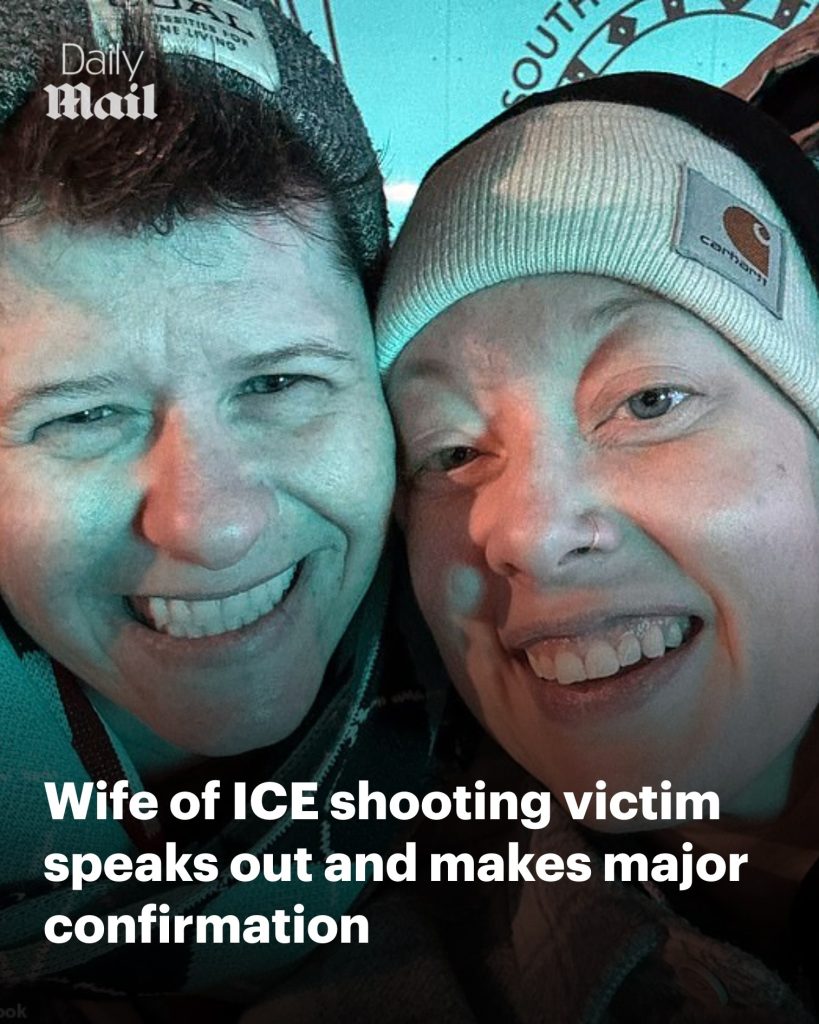
The Tragic Death of Renee Nicole Good: A Call for Justice
The untimely death of Renee Nicole Good, a 37-year-old mother and passionate activist, has ignited a national discourse surrounding immigration policies and the use of force by law enforcement. Renee was shot during an encounter with Immigration and Customs Enforcement (ICE) officers in Minneapolis, an event that has raised fundamental questions about the ethics of government actions and the rights of individuals during immigration enforcement operations. The circumstances of her death, which unfolded in her own neighborhood, have left many community members and advocates reeling, prompting a deep examination of systemic issues within law enforcement and immigration enforcement protocols.
A Confrontation with Federal Agents
On that fateful day, Renee and her wife, Rebecca Good, were present in their community when ICE officers initiated an enforcement action in the area. Witnesses recount how the situation escalated rapidly when federal agents approached Renee’s vehicle. According to official reports, Renee allegedly disregarded commands to exit her vehicle, prompting ICE agent Jonathan Ross to fire three shots. Ross claimed that he felt threatened as Renee began to move her car forward. This assertion has been met with skepticism and outrage from local leaders and advocates, who argue that the use of deadly force was unwarranted given the circumstances. The question remains: was there truly an imminent threat, or could de-escalation tactics have been employed instead?
Sadržaj se nastavlja nakon oglasa
Public Outcry and Controversy
In the days following the incident, security footage released to the public depicted a tense exchange between the couple and the officers involved. The video provides a chilling glimpse into the moments leading up to the tragic shooting, showcasing the fear and uncertainty in Renee’s actions.
Critics of the federal response to the situation have pointed out that the actions of law enforcement appear disproportionate in relation to the threat level presented. The Trump administration’s framing of the incident as a justified act of self-defense has been vehemently contested.
Civil rights advocates argue that such characterizations ignore the broader context of police violence against marginalized communities, highlighting a disturbing trend of excessive force being employed in situations that could be resolved with non-lethal measures.
Renee’s Legacy and Community Response
In an emotional statement to Minnesota Public Radio, Rebecca Good described her late wife as a person filled with compassion and a fierce commitment to equality.
She emphasized that Renee’s intention that day was to lend support to neighbors potentially affected by ICE actions, illustrating a deep-rooted belief in community solidarity and justice. “We had whistles. They had guns,” Rebecca poignantly noted, encapsulating the stark power imbalance experienced during the confrontation.
This sentiment resonates deeply within the community, as many individuals feel vulnerable and threatened by the presence of armed federal agents, particularly in neighborhoods they consider safe.
The profound loss of Renee has not only left a void in the hearts of her loved ones but has also galvanized a community to rally together in pursuit of justice.
Impact on the Community
The heart-wrenching nature of Renee’s death has reverberated throughout her community, intensifying grief and inspiring urgent calls for accountability and police reform. With three children left behind, including a six-year-old son who has already faced the tragedy of losing his father, the impact on their family is devastating.
Community leaders have rallied around Rebecca and the children, offering support while demanding systemic changes to prevent such tragedies from occurring in the future.
Grassroots organizations have organized vigils and rallies, emphasizing the need for a collective response to issues of police violence and immigration enforcement practices that disproportionately affect marginalized populations.
The community’s outpouring of support serves as a testament to Renee’s impact on those around her and reinforces the belief that reform is necessary to ensure that no other family experiences a loss like this.
The Fight for Justice Continues
As investigations into the shooting continue, Minneapolis Mayor Jacob Frey has publicly rejected the narrative that the shooting was justifiable, labeling it as “garbage” based on available footage. This bold stance suggests a growing momentum for accountability in cases of police violence.
Community advocates are calling for a comprehensive review of ICE’s operational protocols, demanding transparency and oversight to ensure that actions taken by federal agents are in line with ethical standards.
In her pursuit of justice for Renee, Rebecca has vowed to instill values of compassion, resilience, and humanity in their son, emphasizing that love and understanding should prevail over fear and violence.
She has become a vocal advocate, participating in community forums and discussions aimed at fostering dialogue around police reform and immigration policy changes.
A National Reflection on Immigration Enforcement
Renee’s tragic death serves as a catalyst for broader discussions regarding immigration enforcement and the treatment of individuals by federal agencies. It raises critical questions about the appropriateness of the tactics employed by agencies like ICE, particularly in community settings where families and children may be present.
Nationwide, many are beginning to reevaluate the implications of aggressive immigration enforcement strategies that rely on fear and intimidation, especially in neighborhoods where individuals should feel secure.
As the nation reflects on this incident, there is a growing recognition of the need for reform in immigration policies and law enforcement practices to ensure that human rights are prioritized.
Advocacy groups have intensified their efforts to push for legislative changes that protect individuals’ rights during immigration encounters, seeking to create a framework where community safety and respect for human dignity are paramount.
Conclusion: A Call to Action
The death of Renee Nicole Good is not just a personal tragedy but a poignant reminder of the ongoing struggles many face in the fight for justice and equality.
As advocates and community members continue to seek answers and push for accountability, it is essential to honor Renee’s memory by fostering a dialogue that champions compassion, justice, and understanding in the face of systemic challenges.
The journey towards reform is long and arduous, but each voice raised in solidarity contributes to the momentum needed for change. Community members are encouraged to engage in advocacy efforts, participate in local meetings, and support organizations dedicated to promoting justice and equality.
By doing so, they not only honor Renee’s legacy but also help pave the way for a future where such tragedies are prevented, and every individual is treated with the dignity and respect they deserve.