In today’s article, we bring you an interesting story about a family inheritance dispute that revealed a painful betrayal hidden during the final months of an elderly father’s life. What initially appeared to be an ordinary discussion about property became an emotional confrontation between a brother and sister who had grown increasingly distant over the years.
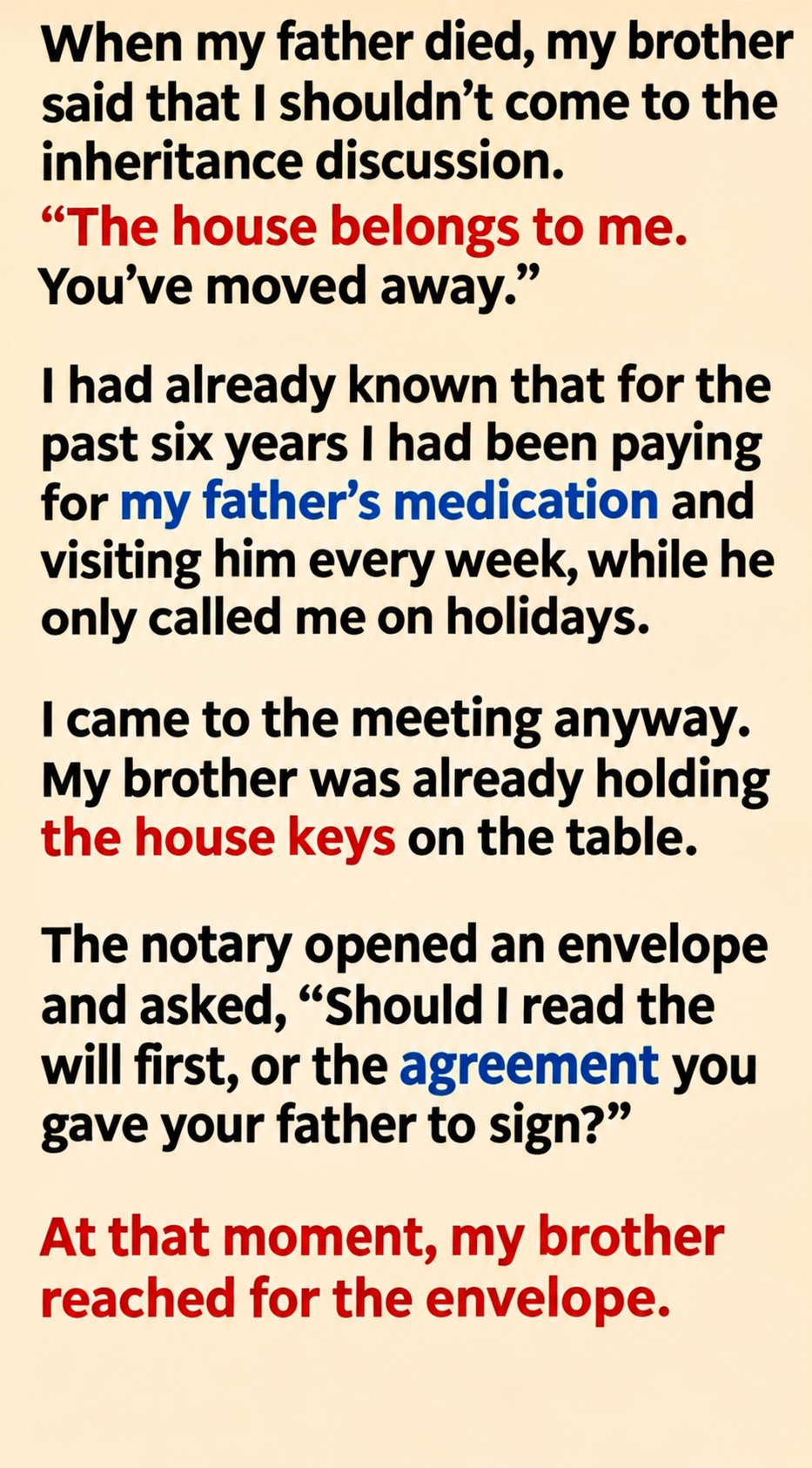
The brother insisted that their father had willingly decided to leave him the family home, while his sister struggled to understand why she had apparently been excluded. For years, she had tried to remain involved in her father’s life despite the tension surrounding their family relationships. She had visited him, helped with expenses, and accompanied him through difficult medical appointments without expecting anything in return. However, a sealed envelope presented during a meeting with a notary revealed that their father had been deeply troubled by documents he believed were connected to repairs on his house. The discovery would force the daughter to confront not only her brother’s behavior but also the painful truth about the fear her father had experienced before his death.
The meeting at the notary’s office began with an atmosphere of barely concealed hostility. The brother appeared convinced that the property belonged to him and repeatedly argued that their father had understood exactly what he was signing. His sister listened quietly, aware that disagreements about the family home had already damaged their relationship. She had spent six years hearing accusations that she was stubborn, difficult, and unnecessarily suspicious of her brother’s intentions. Whenever their father contacted her for assistance, the brother often suggested that she was allowing herself to be used. These comments had gradually created distance between the siblings, even though the daughter continued helping her father whenever she could. What she did not know was that the elderly man had spent the final months of his life trying to understand whether he had been deceived into surrendering part of his own home. That uncertainty would eventually become the central issue in a dispute much more serious than a disagreement over inheritance.
The situation changed when the notary produced an envelope containing documents their father had left behind. The brother immediately reached toward it, but the notary moved it away and explained that the material would remain in the official case file. His reaction surprised his sister because his confidence suddenly seemed to disappear. Just minutes earlier, he had insisted that their father’s intentions were unmistakable and that there was no reason to question the property arrangements. Now, faced with the contents of the envelope, he began arguing that their father had been confused and that the documents should not be taken seriously. The contradiction was impossible to ignore, especially because both explanations could not comfortably support the same version of events. The daughter began to suspect that the papers contained information her brother had never intended her to see. As the notary explained what had been preserved, the atmosphere in the office became increasingly uncomfortable.
WHAT WE HIGHLIGHT: THE FATHER’S LETTER EXPOSED THE SECRET BEHIND THE PROPERTY DOCUMENTS
Inside the envelope was a handwritten letter accompanied by a copy of an agreement concerning the family home. The father explained that his son had previously brought him documents and presented them as authorization for necessary roof repairs. Trusting his son’s explanation, the elderly man had signed without carefully examining every provision. Only afterward did he notice language referring to the transfer of his share of the property. The discovery frightened him because he had never understood the documents as an agreement to surrender ownership. Unable to determine whom he could trust, he eventually asked a neighbor to take him to the notary so that his concerns could be recorded. The most heartbreaking part of his explanation was his admission that he had remained silent because he felt ashamed of having signed something he did not fully understand. For his daughter, those words revealed a vulnerability she had never realized her father was experiencing.
As she read the letter, the daughter struggled to control her emotions. She remembered numerous conversations in which her brother had accused her of interfering in matters that supposedly did not concern her. She also recalled occasions when their father seemed unusually worried but refused to explain what was troubling him. At the time, she had attributed his behavior to age, exhaustion, or ordinary financial concerns. Now she understood that he had been carrying a much heavier burden, one involving the possibility of losing control over the home where he had spent so many years. The fact that he had turned to a neighbor for help was particularly painful because she would willingly have accompanied him herself. He had not remained silent because he distrusted his daughter, but because embarrassment had prevented him from admitting that he might have been misled by his own son. That realization transformed her sadness into a determination to understand exactly what had happened.
The brother continued insisting that the house had been promised to him, but the notary presented additional material that complicated his claims. Among the father’s preserved belongings were records of financial transfers made by his daughter over the years. She had sent money when expenses became difficult, helped with medical costs, and contributed whenever her father needed assistance. Although these payments had never been intended as investments in the property, her father had carefully organized the receipts. According to his explanation, he wanted to preserve evidence of her involvement so that no one could later claim she had abandoned him. Beside the documents was a photograph taken outside a hospital, showing the father and daughter sitting together on a bench. On the reverse side, he had written a short observation explaining that his daughter had never asked what she would receive in exchange for helping him. Those words meant more to her than any discussion of ownership or financial value.
The photograph brought back memories of appointments, difficult conversations, and ordinary afternoons spent beside her father. She remembered waiting in hospital corridors while he underwent examinations and sitting with him afterward when he was too tired to speak. She had never considered those moments something that needed to be documented or defended. Helping him had simply seemed like part of being his daughter, regardless of the complications within the family. Yet her father had apparently understood that the history of their relationship might one day be challenged or misrepresented. By saving receipts and photographs, he had attempted to leave behind a record of the care he received. The evidence did not automatically determine who legally owned the house, but it revealed something equally important: the father had recognized and appreciated the daughter’s presence during his most vulnerable years. For her, that acknowledgment offered comfort even as the dispute surrounding his property became increasingly painful.
The meeting did not end with a simple decision about who would inherit the home. Questions surrounding the disputed agreement required legal examination, and the daughter understood that the notary’s presentation of the documents could not settle everything immediately. She chose to challenge the arrangement through the appropriate legal process, knowing that resolving the matter could take considerable time. During the following months, the relationship between the siblings deteriorated further as disagreements about the property continued. Her brother eventually proposed giving her a relatively small amount of money if she agreed to stop questioning the documents. Although accepting the offer might have ended the immediate conflict, she refused because she believed the truth about their father’s intentions had not yet been established. For the first time, she rejected the idea that preserving family peace required remaining silent about conduct she considered deeply wrong. Her decision was not based solely on the financial value of the property but on the importance of determining whether their father had knowingly agreed to transfer ownership.
The legal proceedings continued for months, leaving both siblings emotionally exhausted. The daughter discovered that defending her father’s wishes required patience, documentation, and the willingness to revisit painful memories. She also understood that accusations of deception needed to be examined through evidence rather than resolved through anger alone. The agreement’s validity and the circumstances surrounding its signature remained matters for the legal process. What she could no longer dismiss, however, was the distress expressed in her father’s letter. He had worried about the possibility that documents presented as routine repairs might affect his right to remain secure in his own home. To his daughter, the greatest betrayal was not the potential loss of property but the possibility that someone close to him had exploited the trust he placed in his family. That concern remained with her long after the original meeting ended.
Following one particularly difficult encounter, the brother asked whether she was prepared to lose her only sibling over a house. His question suggested that their conflict was simply the result of competing financial interests. The daughter, however, saw the situation very differently. She explained that the property itself was not the reason she felt frightened and betrayed whenever she remembered their father’s final year. What troubled her was the knowledge that he had lived with uncertainty about his own security and had felt too ashamed to ask his family for help. She could accept that siblings might disagree about an inheritance, but she could not easily overlook circumstances that appeared to have caused their father such distress. Her brother was asking her to choose between family loyalty and confronting a possible deception, while she believed genuine loyalty required respecting their father’s wishes and protecting the truth. The conversation ended without reconciliation, leaving the siblings separated by questions that money alone could not resolve.
Even after the dispute entered the legal process, the daughter continued keeping the photograph her father had preserved. She often looked at the image of them sitting together outside the hospital, remembering how ordinary that afternoon had seemed at the time. Neither of them could have anticipated that such a simple picture would eventually become an important emotional reminder of their relationship. She had not yet taken possession of the house keys, nor had every question concerning the disputed documents been resolved. Nevertheless, she no longer measured her connection with her father through the possibility of receiving property. His letter had given her something more personal: confirmation that he understood her intentions and valued the assistance she had offered throughout his difficult years. The home remained the subject of disagreement, but the memories of care and trust represented an inheritance that no legal document could fully measure. She continued pursuing answers because she believed her father’s final wishes deserved to be understood rather than overshadowed by accusations and conflicting claims.
This story raises difficult questions about responsibility, trust, and the obligations family members have toward elderly relatives. Property disputes can create lasting divisions, particularly when one person believes that important decisions were made without full understanding or informed consent. At the same time, allegations involving legal documents require careful examination because suspicion alone cannot establish wrongdoing. The daughter’s experience illustrates how deeply such conflicts can affect a family when financial interests become entangled with grief and unresolved resentment. In my view, protecting an elderly person’s independence and ensuring that they understand documents they are asked to sign should always matter more than the personal interests of potential heirs. Family relationships depend on trust, but that trust should never be used as a reason to discourage legitimate questions or prevent someone from seeking independent advice. The daughter may eventually receive a legal resolution, yet nothing can return the months her father spent worrying about what he had signed. His photograph and letter remain reminders that the most painful losses are not always financial and that remaining silent can sometimes allow an injustice to go unexamined. If you discovered that a close relative may have deceived your elderly parent into signing away property, would you remain silent to protect family relationships, or would you insist on discovering the truth? What would you do?