
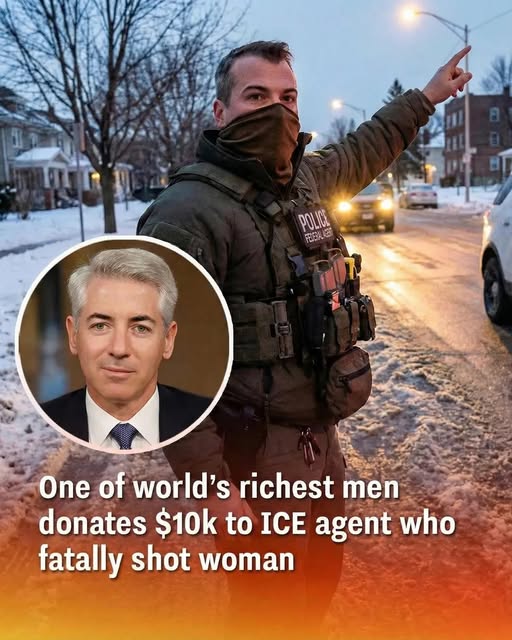
Bill Ackman’s Controversial Support for ICE Agent Raises Eyebrows
In a move that has garnered significant media attention and sparked widespread debate, billionaire investor Bill Ackman recently made headlines by confirming his substantial donation of $10,000 to a GoFundMe campaign aimed at supporting a U.S. Immigration and Customs Enforcement (ICE) agent. This agent, Jonathan Ross, has found himself at the center of controversy following his involvement in a fatal incident that occurred in Minneapolis.
The GoFundMe campaign was launched to provide financial assistance to Ross amid the fallout from the incident, which has raised questions about law enforcement practices and immigration policies in the United States. Ackman’s contribution positions him as the campaign’s top donor, highlighting not only his willingness to support law enforcement but also his endorsement of the actions taken by Ross during the operation. This has inevitably placed Ackman, who is known for his outspoken views on various social and economic issues, in a contentious spotlight, making this a pivotal moment in his public persona.
The Incident: Context and Repercussions
To fully comprehend the gravity of the situation, it is essential to delve into the details of the incident itself. The event in question involved ICE agents conducting an operation that resulted in the death of an individual, igniting a firestorm of debate over the tactics employed by federal immigration enforcement. Critics argue that these operations often lead to excessive use of force and disproportionately affect marginalized communities. For instance, similar past incidents have incited protests across various cities, demanding accountability in cases where law enforcement encounters end tragically.
The aftermath has seen widespread protests and calls for greater accountability in law enforcement. Activists have highlighted how such operations can create an atmosphere of fear within immigrant communities, where individuals may feel compelled to avoid interaction with authorities altogether. Furthermore, the incident has brought to light discussions about the overarching immigration policies in the U.S., which many argue have historically marginalized certain communities, exacerbating tensions between law enforcement and citizens.
As a prominent figure in the finance world, Ackman’s involvement in this controversy is particularly striking. Known for his hedge fund Pershing Square Capital Management, Ackman has made a name for himself as an influential investor, but his foray into political and social issues is not new. Over the years, he has expressed his opinions on various topics, from corporate governance to education reform, but this recent support for an ICE agent marks a significant pivot toward a more polarizing issue involving immigration and law enforcement. His decision to publicly back Ross could be interpreted as a strategic move to align himself with certain conservative factions that advocate for stringent immigration enforcement.
The Public Response
The response to Ackman’s donation has been mixed, with supporters praising him for backing law enforcement and critics condemning his actions as a tacit endorsement of potentially harmful practices within ICE. Social media has become a battleground for opinions, with many users expressing outrage at Ackman’s apparent disregard for the complexities surrounding the incident. Others, however, commend him for standing up for what they view as necessary law enforcement actions aimed at maintaining public order. This public discourse reflects the larger national conversation surrounding immigration enforcement and police practices, underscoring the deep divides in American society on these subjects.Furthermore, Ackman’s donation has sparked discussions about the role of wealthy individuals in influencing social issues and the ethical implications of their financial support. Critics argue that such contributions can be seen as attempts to sway public opinion or policy in favor of certain agendas, raising questions about the intersection of wealth, power, and social justice. The debate has resurfaced conversations about how financial contributions from affluent individuals can impact marginalized groups, often amplifying their voices but sometimes overshadowing the very issues they claim to support.
Ackman’s Broader Impact on Social Issues
Bill Ackman is not merely a passive observer in the societal landscape; his actions and statements have the potential to create ripples that extend far beyond the immediate issue at hand. His financial support for Jonathan Ross has implications that could influence public perceptions of ICE and its operations, as well as the ongoing debates about immigration reform and law enforcement accountability. Such influence underscores the responsibility that comes with wealth and visibility in today’s society, pushing influential figures to carefully consider the ramifications of their monetary endorsements.As the dialogue continues to evolve, it will be essential to monitor how Ackman’s involvement shapes the broader narrative around immigration enforcement and the role of law enforcement in community safety. The complexities of these issues necessitate thoughtful consideration and discussion, as they sit at the intersection of law, ethics, and human rights. This situation serves as a reminder of the ongoing struggle for balance within the legal system, where the need for public safety often collides with the rights of individuals, particularly those from vulnerable communities.
The Future of ICE and Community Relations
The controversy surrounding the incident involving Jonathan Ross may serve as a catalyst for a larger examination of ICE’s practices and their impact on communities across the United States. As public sentiment continues to evolve, calls for reform and accountability within immigration enforcement agencies are likely to persist. This situation presents an opportunity for stakeholders to engage in meaningful dialogue about the future of law enforcement and community relations, focusing on solutions that prioritize safety while respecting the rights and dignity of all individuals.In conclusion, Bill Ackman’s donation to support an ICE agent amidst a contentious situation highlights the complexities of modern philanthropy and activism. As debates about immigration and law enforcement continue to unfold, the implications of his actions will reverberate throughout society, prompting both supporters and critics to reevaluate their perspectives on these critical issues. The ongoing discussion about the intersection of law enforcement and community trust remains vital as the nation navigates these challenging waters. It is a reminder that in the battle of ideology and ethics, the financial backing of influential figures can shape narratives in ways that significantly impact lives and communities.
















