
The Journey of Late Parenthood: Adriana Iliescu’s Unique Story
Becoming a parent is often heralded as one of the most transformative experiences in a person’s life. The moment you hold your child for the first time, a profound connection is established, one that transcends language and cultural barriers. This sentiment rings especially true for Adriana Iliescu, a woman whose journey into motherhood is as remarkable as it is inspiring. In 2005, Iliescu captured global attention when she became a mother at the age of 66, delivering her daughter Eliza and earning the title of the world’s oldest mother. Her story raises questions not only about the boundaries of parenthood but also about societal norms and the evolution of family structures.
A Leap of Faith into Motherhood
Adriana Iliescu’s path to motherhood was not a conventional one. For most of her life, she faced numerous challenges, including the societal pressures often placed on women regarding family and childbearing. Iliescu’s desire to become a mother was deeply rooted in her personal aspirations, but years of fertility struggles left her feeling despondent. After confronting the harsh reality of infertility, she made the bold decision to seek in vitro fertilization (IVF), despite the controversy surrounding it, particularly for women of her age. This choice not only redefined her life trajectory but also ignited a global conversation about the ethics and implications of late parenthood.
The decision to pursue IVF was not taken lightly. Iliescu faced skepticism from both healthcare professionals and the public. Many questioned the wisdom of seeking motherhood at an age when most women have long settled into the roles of grandmothers or even great-grandmothers. Critics voiced concerns about her health, potential longevity, and the societal responsibilities of raising a child in a world increasingly fraught with complexities. Yet, despite the criticism and societal scrutiny, Iliescu remained resolute, driven by an unwavering determination to nurture and raise a child. Her story exemplifies the deep-rooted desire for parenthood that can persist even in the face of overwhelming challenges.
The Birth of Eliza
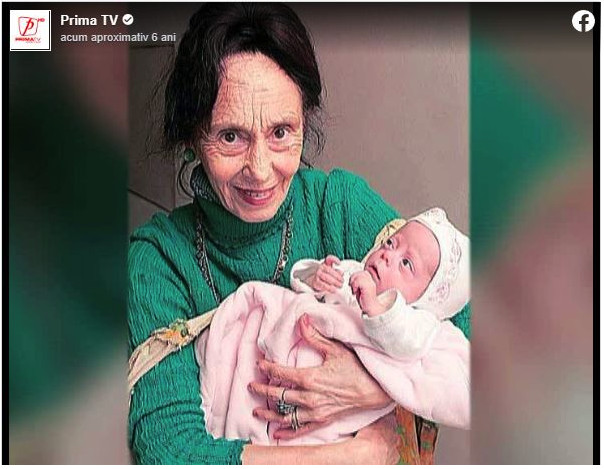
The birth of her daughter Eliza on January 16, 2005, was a moment of profound joy for Iliescu. Not only did it fulfill her lifelong dream of becoming a mother, but it also marked a significant milestone in the realm of reproductive science, showcasing the advances made in IVF technology. As she held her newborn in her arms, the love enveloping her was palpable. Many parents describe this feeling, but few can truly encapsulate the depth of emotion experienced by someone who has waited so long to embrace this moment.However, motherhood at such a late stage of life was not without its challenges. Iliescu faced skepticism from society regarding her ability to care for a newborn. The realities of aging, combined with the demands of parenting an infant, raised valid concerns about her physical health and stamina. Furthermore, the long-term implications of her age on parenting were widely discussed, with critics questioning whether she could adequately provide for Eliza emotionally and financially in the years to come. These challenges paint a complex picture of late parenthood, highlighting both the beauty and the struggles that accompany such a profound life choice.
Societal Reactions and Personal Triumphs
In the wake of her remarkable story, Adriana Iliescu became a media sensation, and her experiences as a new mother were extensively covered by news outlets around the world. Her journey sparked widespread discourse about the changing definitions of family, the role of women in society, and the ethics surrounding reproductive technology. While some applauded her bravery and determination, others were less supportive, focusing instead on the risks involved. This dichotomy of reactions reflects broader societal attitudes towards aging and parenthood—views that are often steeped in traditional notions of family structure.Despite the mixed reactions, Iliescu remained focused on her role as a mother. She embraced the joys and trials of parenting, cherishing every milestone with Eliza. The bond they formed was fortified by the knowledge that they had overcome societal expectations and personal obstacles together. Through this journey, Iliescu has shown that love and commitment can flourish irrespective of age, opening doors for future discussions about the potential for late parenthood. Her story serves as a beacon of hope for those who may feel constrained by age-related societal norms.
Reflections on Aging and Parenthood
As Adriana navigated the challenges of motherhood, she also contended with her own aging. The realities of caring for a young child in her late sixties were compounded by the physical demands of parenting, presenting unique challenges that required resilience and adaptability. Nevertheless, she approached these challenges head-on, developing a routine that allowed her to balance her health needs with the energetic demands of her daughter. This journey has not only shaped her experiences but has also fostered a deeper understanding of the complexities of aging and parenthood.Iliescu’s story invites a reevaluation of societal attitudes toward aging and parenthood. It challenges the notion that age should dictate one’s ability to nurture and care for a child. Her experiences emphasize that the desire for parenthood can manifest at any age and that the emotional rewards of such a journey can be profound. The narrative around late parenthood is evolving, reflecting a world where women increasingly pursue their dreams and desires, irrespective of conventional timelines. As societal perspectives shift, the story of Adriana Iliescu serves as a powerful testament to the strength of the human spirit and the enduring desire for connection through parenthood.
Conclusion: A Legacy of Love
Adriana Iliescu’s journey into motherhood is more than just a personal story; it is a reflection of the changing dynamics of family, societal norms, and the capabilities of women. Her experience serves as a powerful reminder that love knows no age and that the capacity to nurture and raise a child can be found in the most unexpected places. As she continues to raise Eliza, Iliescu is not only creating a legacy of love but is also paving the way for future discussions about the possibilities that late parenthood can offer.In a world that often imposes limitations based on age, Adriana Iliescu stands as a beacon of hope, demonstrating that the journey of motherhood can be as unique as the individual embarking on it. Her story is a celebration of resilience, love, and the unyielding spirit of a mother determined to embrace life, regardless of the challenges she may face. This narrative also encourages future generations to redefine the boundaries of parenthood, emphasizing that the quest for love and connection transcends age and societal expectations.
















