
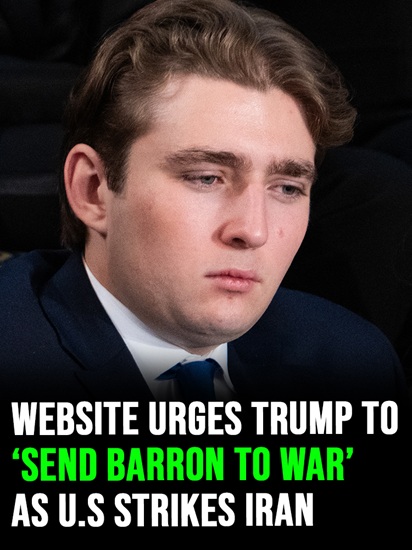
The Viral Phenomenon of DraftBarronTrump.com: A Satirical Response to War
In early March 2026, a peculiar social media sensation emerged, capturing the attention of users both in the United States and globally: the name Barron Trump, the youngest son of former President Donald Trump, became the focal point of countless posts, memes, and discussions linked to the rising conflict between the United States and Iran. What sparked this sudden surge of online chatter wasn’t Barron’s articulation of foreign policy or any military involvement; rather, it was a piece of political satire that delivered a pointed message with humor. This phenomenon originated from a parody website known as DraftBarronTrump.com, which aimed to stimulate discourse about political leadership, warfare, and the impact of military decisions on younger generations.
The Launch of a Satirical Movement
On February 28, 2026, the very day the United States and Israel initiated significant military strikes against Iranian targets—an event that garnered extensive media coverage—a comedic website titled DraftBarronTrump.com made its debut. The site was designed to provoke thought and laughter in equal measure, crafted by Toby Morton, a comedy writer with a storied background in political satire through programs like South Park and MADtv. Morton’s comedic style often employs hyperbole to critique public figures and the political landscape, and this new site was no exception. By presenting exaggerated and ironic content about President Trump and his youngest son, the website quickly captured the imagination of social media users.
Content of the Website
The homepage of DraftBarronTrump.com is cleverly designed to resemble a patriotic petition but is infused with a distinctly humorous tone. Among the tongue-in-cheek phrases featured are statements such as: “America is robust because its leaders are robust. President Trump exemplifies this daily,” and “Naturally, his son Barron is more than prepared to defend the nation his father boldly commands.” This satirical rhetoric serves to highlight the absurdity of calling for a sitting president’s child to serve in combat, using parody to critique the rhetoric often used in political discourse. The site even includes fabricated quotes attributed to family members, further accentuating its comedic intent and pushing the boundaries of satire into a performance art that comments on the nature of power and privilege.
The Rise of the #SendBarron Movement
Within mere hours of the site’s launch, the hashtag #SendBarron began trending across various social media platforms in the United States. Users rapidly shared links to the site, created their own interpretations, and engaged with the concept through memes. While many posts embraced the irony embedded in the original site, others utilized the hashtag to express deeper frustrations related to the ongoing conflict and the perceived disconnect between political elites and ordinary citizens. Platforms like X (formerly Twitter), Reddit, and Instagram witnessed a flurry of creativity as users produced images of Barron Trump donned in military attire, often accompanied by humorous captions that played on the absurdity of the premise. For instance, one meme featured Barron in a full military uniform with the caption, “When you realize your dad’s policies are putting you on the front line!”Exploring the Themes of the Satire
The social media discourse surrounding #SendBarron revealed several recurring themes, including critiques of perceived hypocrisy among political leaders who have historically avoided military service while advocating for others’ children to fight. These critiques echo the sentiments of many citizens who feel that those in power often fail to bear the burdens of their decisions. Users also engaged in a playful examination of military draft questions, despite the U.S. not currently having an active draft. Jokes about Barron Trump’s noted height—6 feet 9 inches—added another layer of humor, as some pointed out that his stature would technically disqualify him from enlisting in certain military branches. As one user quipped, “He’s more likely to be drafted into the NBA than the Army!” It is crucial to understand that while the trend sparked serious political conversations, it largely remained a form of social media humor and satire, reflecting public sentiments rather than signaling an actual movement or recruitment effort. The lightheartedness of the memes belied a more profound discontent with the status quo, as they allowed users to voice their frustrations in a manner that was both entertaining and poignant. This duality illustrates the unique power of satire: it can entertain while simultaneously provoking critical thought about societal issues.The Broader Context of Political Satire
The military operations targeting Iranian locations, often referred to as Operation Epic Fury, have emerged as defining geopolitical events of early 2026. As details about the conflict surfaced—reporting on casualties and the political implications of the U.S. involvement—public sentiment turned towards questioning the justifications for such military actions. In this atmosphere, the viral popularity of DraftBarronTrump.com is emblematic of a growing dissatisfaction with political leadership and military decision-making processes. The humor, in this case, functions not only as entertainment but also as a means of protest, reflecting underlying anxieties regarding the human costs of war. This moment serves as a reminder of how political satire can play a crucial role in shaping public discourse. By highlighting the disconnect between the realities of war and the rhetoric of political leaders, the site invites users to scrutinize their leaders’ decisions and question the morality of putting certain individuals—especially young people—into harm’s way. Moreover, it encourages a cultural reflection on how society views military service, particularly in light of the privileges enjoyed by political families.Understanding the Distinction between Satire and Reality
To mitigate the spread of misinformation, it is vital to clarify certain aspects surrounding the satire:- DraftBarronTrump.com is a satirical creation, not a legitimate petition or governmental initiative.
- There is no ongoing military directive involving Barron Trump; he is not being drafted or considered for service.
- Discussions about military eligibility based on height are humorous and not reflective of any official policy.
- The trend on social media is largely driven by memes and satire, with most posts focusing on humor rather than serious political action.
















