
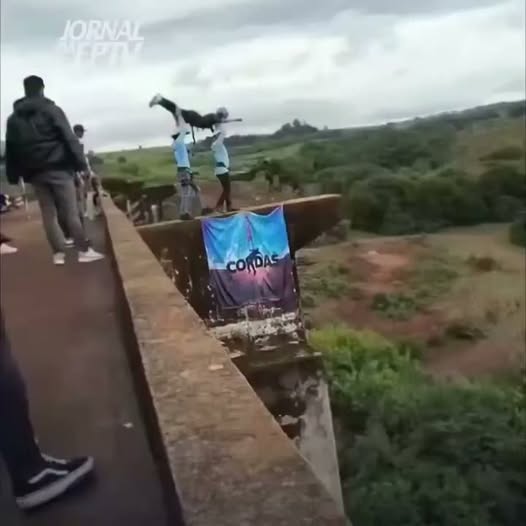
Tragic Bridge Jumping Accident in Brazil Sparks National Outcry
A devastating incident in Brazil has captured both national and international attention after a young woman tragically lost her life during a bridge-jumping recreational activity in the state of São Paulo. This unfortunate event has ignited a fervent discussion about safety standards, operational oversight, and the crucial importance of adhering to established protocols in adventure tourism.
The 21-year-old victim was reportedly participating in an organized bridge-jumping event at a site infamously referred to as the “Skeleton Bridge” in the city of Limeira. What many anticipated as an exhilarating outdoor experience swiftly transformed into a heartbreaking tragedy, leading to a thorough investigation into the details surrounding the accident.
Initial findings from local authorities indicate that a vital safety procedure may have been neglected prior to the jump. Allegations have surfaced suggesting that the safety harness meant to secure the participant was not properly attached before she leaped from the platform. Consequently, she fell approximately 40 meters (around 131 feet), an incident that would ultimately prove fatal.
Emergency services were quick to respond to the scene, but despite their best efforts, the young woman could not be rescued, leaving family, friends, and onlookers in profound shock and grief. The profound impact of this loss has resonated across Brazil, stirring public concern and prompting widespread dialogue about safety in adventure sports.
This tragic incident has emerged as a major topic of conversation, particularly after reports surfaced that the horrifying event was recorded on video. However, media outlets and law enforcement officials have largely concentrated on the investigation itself rather than the disturbing footage. Their focus emphasizes the urgency of understanding the precise sequence of events and the factors contributing to such a catastrophic accident.
Within hours of the incident, authorities initiated a formal inquiry, leading to the detention of six individuals associated with the operational management of the bridge-jumping activity.
Investigators are rigorously scrutinizing whether all requisite safety measures were observed and if any oversights might have contributed to the tragic outcome. Evidence is being meticulously gathered from various sources, including witness statements, operational records, training documents, and safety protocols. The objective is to attain a comprehensive understanding of the circumstances that culminated in this unfortunate event.
A critical focus for the investigators is the verification process that should be conducted before any participant is allowed to jump.
Adventure activities that involve significant heights often depend on numerous layers of safety precautions designed to mitigate risks. Industry experts emphasize that these safety procedures typically include various independent checks. Equipment undergoes visual inspections, participants receive verbal confirmation regarding safety measures, and multiple staff members may verify that all connections and protective systems are secure.
These layers of safety are designed to create redundancy, ensuring that a single lapse does not lead to severe consequences. Authorities are now tasked with determining whether these standard operating procedures were correctly implemented the day of the incident.
Beyond the immediate actions of the personnel involved in the event, investigators are delving into broader operational questions. Reports indicate that there is a possibility of examining licensing requirements, compliance with regulations, certifications, and other operational factors related to the management of the activity. The investigation will scrutinize whether the operation met all local legal and safety standards.
This includes reviewing documentation pertaining to permits, staff qualifications, equipment maintenance, and overall operational oversight.
Experts in the adventure tourism industry contend that recreational jumping activities are typically safe when conducted under strict professional supervision and adherence to established guidelines. However, the overall success of these activities hinges on the unwavering commitment to safety protocols. Even seasoned operators must exercise continuous vigilance. Safety professionals consistently assert that protocols are instituted not just for participant safety but also to account for human error.
By implementing multiple checks and confirmations, organizations can significantly minimize the likelihood of mistakes. Many specialists describe contemporary safety systems as layers of defense, where accidents become exceedingly rare if each layer functions correctly.
The tragedy has also reignited discussions about the safety culture prevalent within the expanding adventure tourism sector. Many observers have highlighted the immense trust participants place in organizations and professionals conducting these experiences. This trust is built on a foundation of rigorous training, clear communication, strict operational procedures, and a steadfast commitment to maintaining high standards.
For many, this incident stands as a sobering reminder that safety must never become routine or overlooked, irrespective of how frequently an activity is conducted. Consistent attention to detail remains paramount in preventing accidents and safeguarding participants.
Meanwhile, the victim’s family is pressing for answers regarding the events that led to this heartbreaking incident. Loved ones are hopeful that the ongoing investigation will shed light on the circumstances surrounding the tragedy, offering clarity and understanding as they navigate their profound loss. Legal experts note that establishing responsibility in such cases often necessitates extensive analysis.
Investigators may need to scrutinize documentation, interview witnesses, assess operational practices, and evaluate the adherence to established procedures. As such, reaching definitive conclusions may require time.
Authorities have urged the public to refrain from speculation while the investigation is in progress, emphasizing that thorough information gathering and an exhaustive review are crucial for ensuring a fair understanding of the incident. As the investigation unfolds, this tragic event serves as a stark reminder of the fundamental importance of safety protocols in activities involving elevated risks.
Even seemingly minor oversights can lead to life-altering consequences, underscoring the necessity of strict adherence to established procedures. Officials have stated that they will provide additional information as the investigation progresses, but for now, many questions remain unanswered, and authorities continue their work to determine precisely what transpired and whether operational improvements can be made to avert similar tragedies in the future.
















