
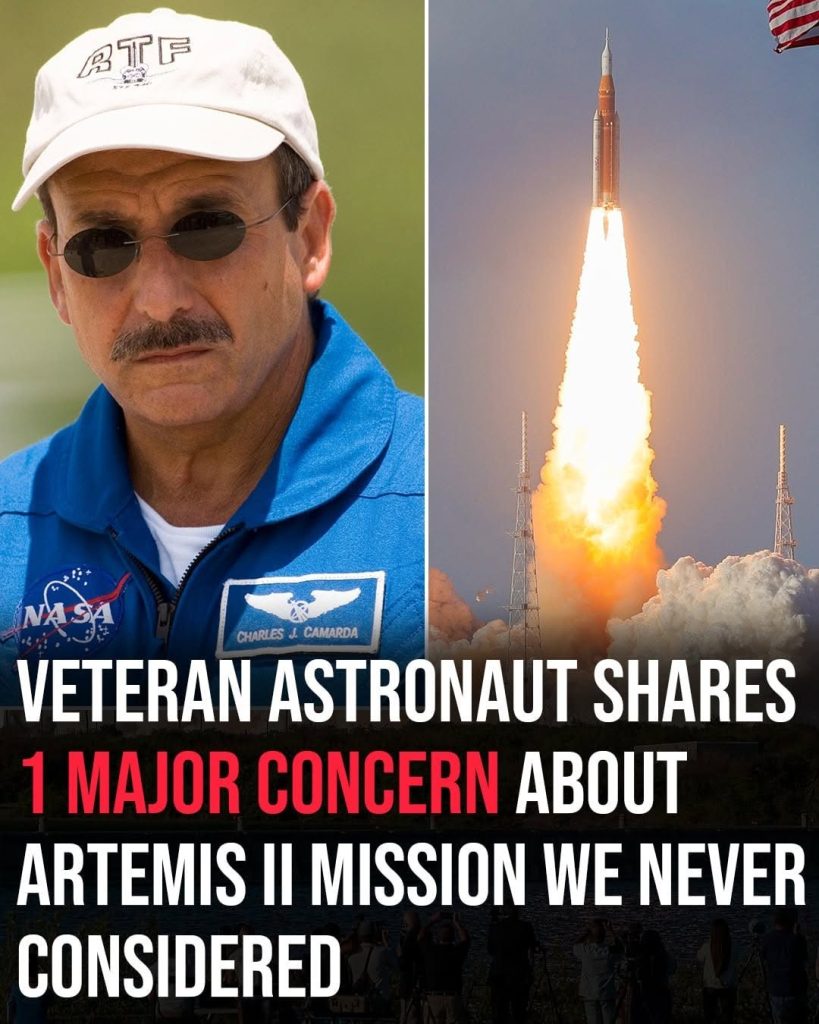
NASA’s Artemis II Mission: A Step Toward Our Lunar Future
As we look toward the future of human space exploration, NASA’s Artemis II mission stands out as a pivotal undertaking. Scheduled for launch on June 15, 2026, this mission will aim to send astronauts beyond low Earth orbit for the first time since the storied Apollo missions.
The Artemis II mission is not just a technical endeavor; it embodies the hope of establishing a sustained human presence both in lunar orbit and eventually on the Moon’s surface. This ambitious goal has garnered immense interest, but it has also ignited important conversations about safety and organizational culture within NASA.
The Artemis program represents a comprehensive approach to space exploration, aiming to return humans to the Moon and prepare for eventual missions to Mars. Unlike the Apollo missions, which were standalone endeavors, Artemis is designed to create a sustainable presence on the Moon, with Artemis II serving as a critical step toward that goal.
The mission will build on the advancements made during Artemis I, which was an uncrewed test flight that successfully validated the Orion spacecraft and the Space Launch System (SLS) through a series of complex maneuvers. With Artemis II, NASA is poised to not just revisit the Moon, but to establish a framework for future exploration that prioritizes safety, resilience, and international collaboration.
Veteran NASA astronaut Charles Camarda has emerged as a vocal advocate for a strong safety culture as preparations for Artemis II ramp up. Drawing from his experience during the post-Columbia “Return to Flight” mission, Camarda stresses that the lessons learned from past tragedies should shape the present and future of spaceflight safety.
He highlights a concept he refers to as the “normalization of deviance.” This term reflects a dangerous trend where minor, repeated safety oversights are gradually accepted as standard, leading organizations to overlook serious risks that may escalate over time. For instance, during the Challenger disaster, engineers recognized issues with the O-rings but allowed the launch to proceed, resulting in catastrophic consequences.
This example serves as a grim reminder of how critical it is to uphold safety standards and not to allow complacency to set in.
The Dangers of Normalization
Camarda’s warnings serve as a stark reminder of the need for vigilance in high-stakes environments such as NASA. He argues that organizations must remain hyper-aware of even the smallest technical anomalies, which can lead to catastrophic failures. The tragic histories of the Challenger and Columbia missions serve as stark reminders of the consequences of complacency and the failure to heed warnings.
Each incident reshaped NASA’s approach to risk assessment, emphasizing the necessity of rigorous safety protocols and an unyielding commitment to excellence in engineering. In his view, safety must be woven into the very fabric of NASA’s culture, viewed not merely as a box to be checked, but as an ongoing commitment that permeates every aspect of mission planning and execution.
As Artemis II prepares for its crewed lunar flyby, it will test the Orion spacecraft and the Space Launch System (SLS) in critical ways. The mission aims to evaluate life-support systems and deep-space operations, making it a vital step toward future lunar landing missions under the Artemis program.
NASA has labeled this mission as a crucial validation point, and it is vital that the agency learns from each step along the way. This mission not only tests technology but also serves as a benchmark for how well NASA can respond to potential risks while navigating the complexities of human spaceflight.
It will assess the spacecraft’s capabilities to operate in deep space, ensuring that systems function effectively under the unique conditions of lunar orbit. The data collected during this mission will inform the design and operational strategies for future missions, including Artemis III, which will aim to land astronauts on the lunar surface.
Safety as a Central Priority
While NASA’s leadership has repeatedly asserted that safety is the agency’s foremost priority, critics like Camarda caution that this commitment must manifest in concrete actions. The integration of updated systems, comprehensive testing protocols, and lessons from previous missions all contribute to a robust safety framework. Independent reviews and multiple verification stages are essential in the preparation process for crewed launches, ensuring that every potential risk is addressed.
The broader implications of these safety measures extend beyond Artemis II, influencing how future missions will be planned and executed. For instance, the implementation of advanced simulations and redundant systems aims to mitigate risks that could arise during critical mission phases, such as launch and re-entry.
The Artemis II mission is being closely monitored not just as a significant milestone in the realm of space exploration, but also as a litmus test of NASA’s institutional discipline. The mission encapsulates a broader tension in high-risk engineering: the need to balance ambition and urgency with caution and procedural thoroughness.
As we venture into the next chapter of human spaceflight, the lessons learned from past missions and the ongoing discourse about safety culture will play an essential role in shaping the future of exploration beyond our planet. The public’s interest in space exploration continues to grow, with communities rallying around the promise of a return to the Moon and the potential for Mars missions.
NASA’s ability to maintain a zero-incident record during Artemis II will be pivotal in bolstering public trust as well as ensuring adequate funding and support for future endeavors.
A Culture of Engineering Excellence
At the heart of Camarda’s philosophy lies the idea of maintaining an “engineering-first” mindset. He advocates for empowering technical experts within the decision-making process to ensure that safety considerations are not compromised due to organizational pressure, scheduling demands, or public expectations. This emphasis on technical authority is crucial, especially in an age where the public’s appetite for space exploration is insatiable.
The challenge for NASA will be to foster an environment where engineers feel encouraged to voice concerns and where safety remains at the forefront of all discussions. Transparency in communication and a culture that celebrates speaking up about potential issues will be vital in achieving this balance.
As we eagerly await the launch of Artemis II, the mission promises to be a watershed moment in our quest to return humans to the Moon and beyond. The synthesis of technological innovation and rigorous safety protocols will determine the success of this mission and set a precedent for all future endeavors in space exploration.
The implications of Artemis II extend far beyond the confines of a single mission; they represent humanity’s aspiration to explore the cosmos while upholding the highest standards of safety and integrity. With each successful mission, NASA will not only push the boundaries of technological capabilities but also inspire the next generation of scientists and engineers to dream big and reach for the stars.
















